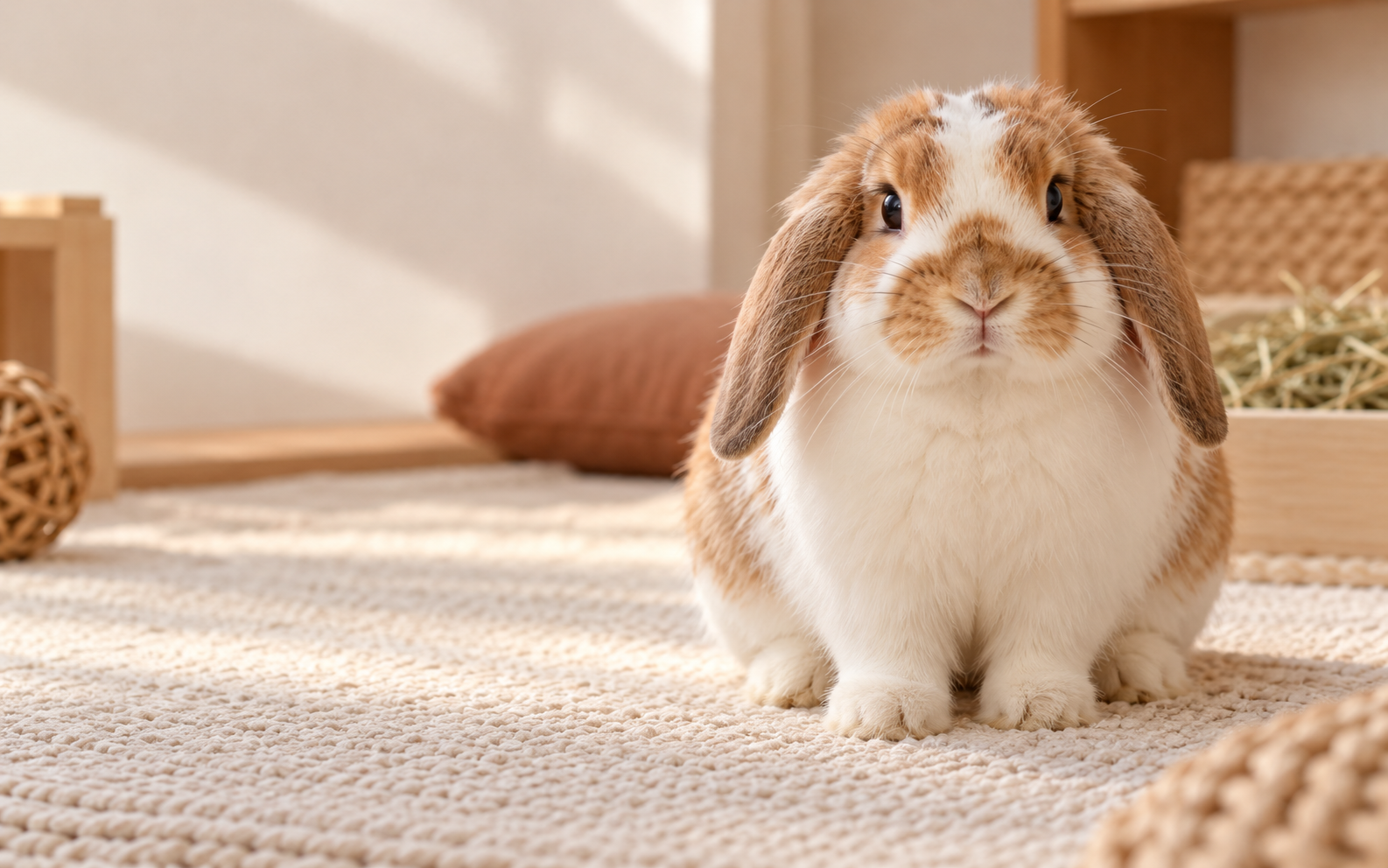
A guinea pig hay feeder should keep hay clean and easy to reach without restricting access. Guinea pigs need constant access to appropriate grass hay, so the feeder is a housekeeping tool rather than a rationing device. Openings, mounting height, capacity, placement, and competition between animals all matter. These seven mistakes can make an apparently tidy rack less safe or less useful than a simple pile of hay.
Mistake 1: using openings that can trap a head or limb
Wire gaps and decorative cutouts need to be checked from the animal’s point of view. A guinea pig may push its head farther into an opening than expected while pulling hay. Avoid designs with gaps that could trap the head, leg, or jaw.
If you are unsure about a rack, supervise its first use closely. A solid-sided feeder with appropriately sized access slots may be easier to evaluate than an improvised wire basket.
Mistake 2: mounting hay too high
Guinea pigs should be able to eat in a natural posture from the floor. A feeder mounted high enough to require stretching or climbing adds effort to a basic food source. Watch whether the pigs can reach the lowest and highest hay without standing awkwardly.
Young, senior, or less mobile animals may need especially low access. The feeder should adapt to the animals rather than encouraging them to climb the cage wall.
Mistake 3: choosing a capacity that leaves hay stale for days
A very large rack reduces refilling, but old hay can become dusty, compacted, or contaminated. Check hay every day and remove material that is damp, soiled, or no longer fresh.
Top up only when the remaining hay is still clean. Periodically empty the feeder completely so old pieces do not become a permanent layer at the bottom.
Mistake 4: placing the feeder beside a leaking bottle or soiled corner
Hay spoils quickly when wet. Keep the rack away from bottle drips and locations where urine regularly reaches it. If the enclosure layout forces the hay into a damp area, move the water source or change the feeder position.
Check the floor beneath the rack. A feeder that stays dry above can still drop hay into wet bedding below, where animals may continue to eat it.
Mistake 5: providing only one narrow feeding point for several guinea pigs
Social animals can still block one another. If two or more pigs share the enclosure, a feeder with one small opening can create competition. Use a wide access area, multiple openings, or more than one hay location.
Watch for a quieter guinea pig waiting until another animal leaves. Hay should be continuously available without requiring an animal to challenge a cage mate.
Mistake 6: treating a feeder as a way to restrict hay
The purpose of a hay rack is to keep hay accessible and cleaner, not to limit intake. Guinea pigs rely on grass hay as a major part of normal feeding. If the rack makes hay difficult to reach, it is working against the goal.
Offer enough hay that the animals do not have to pull every last strand through a tight opening. Follow veterinarian or reliable species-specific nutrition guidance for the rest of the diet.
Mistake 7: ignoring cleaning under and behind the feeder
Loose hay, dust, and droppings collect around mounting points. Remove the feeder regularly and clean the surrounding enclosure. A fixed rack that is never moved can hide damp bedding and old food.
Clean the feeder itself according to its material and dry it before adding fresh hay. Check edges, hooks, and fasteners for rust or damage.
Compare rack use with a simple hay pile
If the guinea pigs seem to struggle with a feeder, offer clean hay in a safe floor pile or alternative container and watch the difference. Some pigs enjoy burrowing and foraging through loose hay. The tidiest option for people is not always the most useful option for the animals.
You can combine methods: a rack for keeping a large portion clean and a fresh floor pile for enrichment, provided wet or soiled hay is removed regularly. The best system is one that keeps hay abundant, accessible, and easy to refresh.
Make hay access generous enough for normal feeding behaviour
Guinea pigs need constant access to appropriate hay, so a feeder should make eating easy rather than rationing strands through tiny openings. Watch the animals during several quiet periods, not only when fresh hay is added. They should be able to pull hay without repeatedly wrenching the head, standing at an awkward angle, or giving up while plenty remains trapped inside. Some waste is normal and does not mean the rack should become more restrictive. A floor-level hay area lined with clean hay can be a useful comparison because it shows how the guinea pigs prefer to position themselves. If a feeder reduces access or creates frustration, neatness is not a good trade-off for normal eating.
Design the hay area for more than one guinea pig
Social groups need enough feeding space that one confident animal cannot control the only opening. A wide rack, multiple access points, or more than one hay station can reduce crowding. Place the stations so a guinea pig can move away without being trapped in a dead end. During feeding, look for repeated displacement, guarding, chasing, or one animal waiting until another leaves. Body weight and appetite should also be monitored as part of routine care, because a tidy feeder can conceal the fact that an individual is eating less. If group dynamics change, adding another hay location is often more useful than simply buying a larger version of the same narrow design.
Keep the hay dry without making the rack difficult to clean
Position matters as much as feeder construction. Hay placed directly below a dripping water bottle can become damp, while a rack beside a favourite toilet corner may collect urine or soiled bedding. Choose a location that stays dry and can be reached for daily tidying. Empty old compressed hay rather than continually topping it with fresh handfuls, and brush or wipe the feeder when dust and fragments build up. Check behind wall-mounted racks, where loose hay can collect unnoticed. If the design has fabric, wood, or complex seams, consider how those materials will be cleaned and dried before they become part of the enclosure.
Inspect openings as animals grow or the group changes
A gap that appears safe for an adult may not suit a younger or smaller guinea pig. Likewise, bent wire, stretched fabric, or a loosened attachment can change the size of an opening over time. Run a visual check whenever the feeder is refilled: look for protruding wire ends, frayed fabric, chewed plastic, loose clips, and spaces where a head or foot could become caught. Mounting hardware should stay outside the animals’ reach where possible. If a feeder has been modified by chewing, replace it rather than assuming the damage is cosmetic. Safety, easy hay access, and simple cleaning should remain the priorities throughout the life of the setup.
Think about hay dust and the height of the animal’s face
A feeder that forces a guinea pig to pull hay directly above the eyes can shower small fragments downward. Lower, side-access arrangements often make it easier to eat in a natural posture and keep dust away from the face. Shake out excessively dusty hay before filling the area and discard hay that smells musty, feels damp, or shows signs of contamination. The feeder cannot improve poor-quality hay. If a guinea pig develops persistent sneezing, eye discharge, breathing difficulty, or reduced appetite, do not assume the rack is the only cause; seek veterinary advice promptly. The goal is clean hay at a comfortable height, with room to move away freely.
Use daily refilling as a quick health observation
Because hay should be checked every day, the feeder creates a useful opportunity to notice changes. Look at how much hay has been eaten, whether droppings around the area look normal, and whether each guinea pig comes to feed with its usual enthusiasm. A rack that stays unexpectedly full may mean the hay is stale, the opening is awkward, or an animal is eating less. Reduced eating in guinea pigs can become serious quickly, so a clear drop in appetite deserves prompt attention rather than waiting for the next scheduled cage clean. A visible hay station helps the household notice changes sooner.
Balance tidiness with enrichment and natural movement
Hay is food, but it is also part of normal foraging behaviour. Some guinea pigs enjoy pulling strands from a rack, burrowing into a clean pile, or moving between more than one hay location. A perfectly contained feeder is not necessarily the most useful setup if it removes all of that choice. Many households combine a safe rack with a generous floor-level hay area or tray, then adjust based on cleanliness and the animals’ preferences. The right arrangement is one that keeps hay available, dry enough to remain appetising, easy to replace, and accessible without trapping or crowding. A little scattered hay is often a reasonable cost of allowing normal feeding behaviour.
Final takeaway
Choose a guinea pig hay feeder with safe openings, low comfortable access, enough feeding space for every animal, and a location that stays dry. Refill with fresh hay and remove soiled material rather than treating the rack as permanent storage. Most importantly, do not use the feeder to ration a food that should remain continuously available. If appetite, weight, or chewing changes, seek veterinary advice promptly.
Editorial reference points
- Association of Exotic Mammal Veterinarians — owner resources
- Association of Reptile and Amphibian Veterinarians
Product specifications, prices and policies can change. Verify current manufacturer documentation before purchasing, and use a veterinarian or qualified species professional when a health or welfare concern is involved.
Compare the next decision or return to the complete 290-guide library.