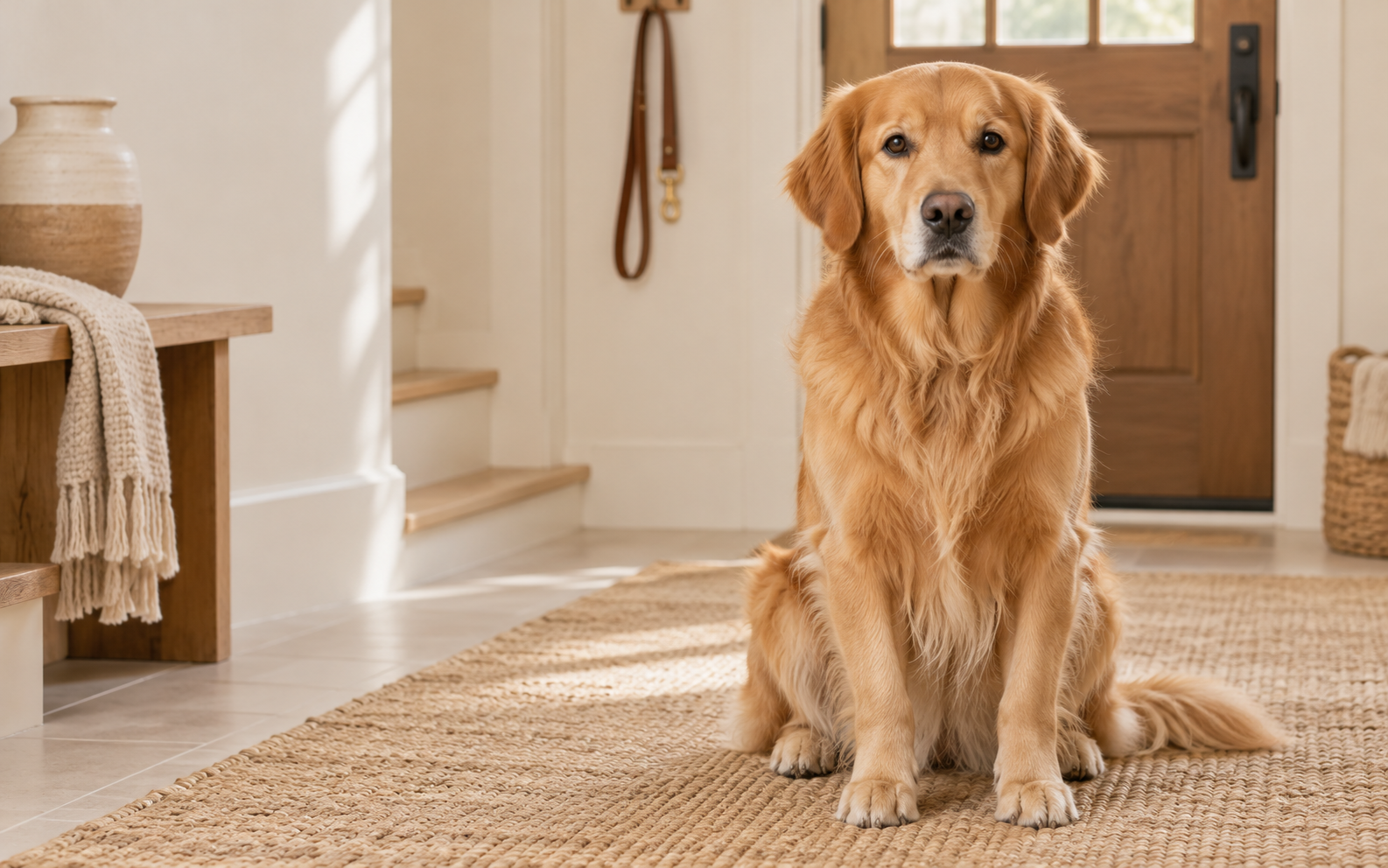
Start by watching where your dog chooses to rest when the house is quiet. Some dogs stretch out on a cool floor; others curl against a soft edge. A successful resting area accommodates that behavior while staying accessible and easy to clean. The most expensive bed can fail if it sits in a busy doorway or forces the dog to step over a high bolster.
Measure the sleeping dog, not just the room
Observe both curled and stretched positions. Compare those measurements with the usable sleeping surface, which may be smaller than the product's overall dimensions. Bolsters take up space. A rectangular cushion can provide more stretch room than a round bed with the same advertised width. Leave approach space around the bed so the dog can enter and turn without squeezing between furniture. Test the outline with a towel before committing floor space.
Pick a location that allows uninterrupted rest
Avoid door swings, direct heat sources and places where people repeatedly step over the dog. In a busy household, a quieter corner can work better than the center of activity. Some dogs want to remain near people, so isolation is not automatically calming. Offer a choice where possible. Teach household members that the resting space is a place to leave the dog alone, especially during sleep or when the dog has chosen to withdraw.
Check access and stability
A low entrance can be easier for a dog that hesitates over an edge. Make sure the bed does not slide when the dog steps onto it. Press the cushion to judge whether it immediately bottoms out, but do not treat a marketing term such as orthopedic as proof that it treats pain. New reluctance to lie down, repeated repositioning or difficulty rising needs a veterinary assessment. Changing the cushion should not delay that conversation.
Plan laundry before buying
Read whether the whole bed or only the cover can be washed. Check zipper access, drying instructions and whether the inner cushion can be protected from accidents. A bulky cover that exceeds your washer's capacity may create a recurring chore. Keep a spare cover or blanket if drying takes time. Inspect for chewed seams and exposed filling, and remove damaged bedding when the dog can pull pieces off.
Evaluate a week of ordinary use
Watch whether your dog settles voluntarily and stays comfortable as household activity changes. If the dog sleeps beside the bed, consider temperature, surface firmness and position before buying another model. Change one variable at a time. A practical result might be two modest resting options in different rooms rather than one oversized bed. The goal is dependable rest, not persuading the dog to use a particular purchase.
Sources and scope
This guide offers practical selection and setup checks. It does not claim hands-on testing of named products. Follow the exact product manual for installation and care; consult a veterinarian about changes in your pet’s health or behavior.