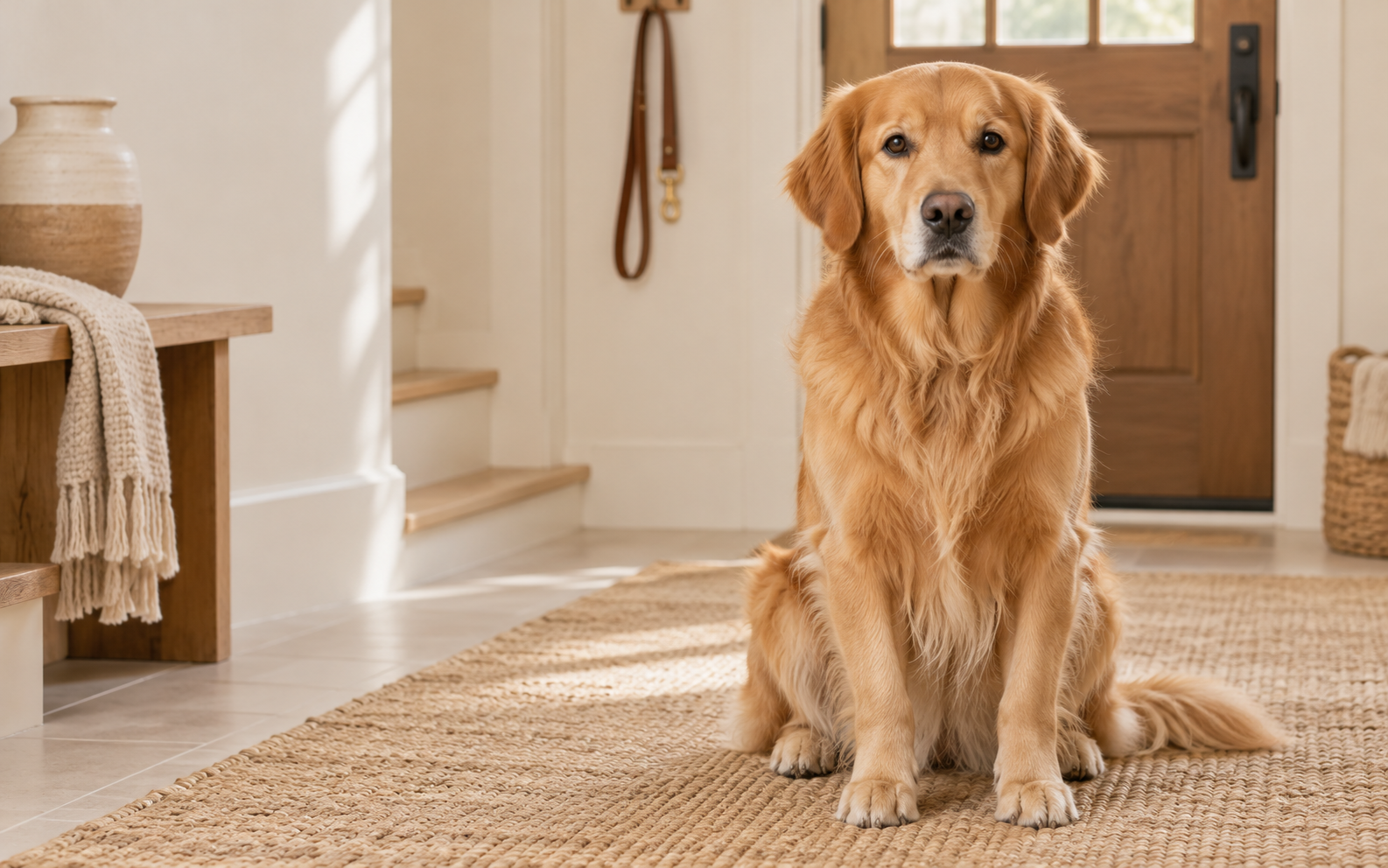
In a small home, a dog bed has to earn its floor space. It should give the dog a comfortable, predictable place to rest while remaining easy to clean, easy to walk around, and compatible with the way the room is actually used. The best choice is rarely the largest or thickest bed available. Fit, support, cover design, drying time, and placement matter more than decorative features.
Measure the dog at rest
Watch how the dog naturally sleeps. A curled sleeper can use a smaller oval or bolster bed; a dog that stretches on its side needs more rectangular length. Measure from nose to rump while the dog is relaxed and add enough room for repositioning. A bed that technically fits the dog only when tightly curled may be too small for comfortable sleep.
Measure the room too
Mark the proposed footprint with painter’s tape before ordering. Check door swing, drawers, walking paths, and whether a robot vacuum or desk chair needs the same space. In a studio apartment, a bed that blocks the only path through the room will eventually be moved, which defeats the value of giving the dog a consistent resting place.
Support for different dogs
Young healthy dogs may be comfortable on many surfaces, while large, older, or arthritic dogs often benefit from more supportive foam that does not collapse completely under body weight. Very soft beds can be difficult for a mobility-limited dog to stand up from. If your dog has joint disease or pain, ask a veterinarian about appropriate support rather than relying on “orthopedic” marketing alone.
Bolsters and open edges
Bolsters give some dogs a place to lean the head and can create a sense of enclosure. They also take away usable sleeping area and create a higher step. A senior dog may prefer one low or open side for easy entry. Check whether the internal sleeping dimensions, not just the outside dimensions, fit the dog.
Removable covers
A zippered, machine-washable cover can be more important than the type of foam. Look at how easily the cover comes off and whether the zipper is hidden from chewing. If the inner cushion cannot be washed, a waterproof or water-resistant liner can help protect it from drool, accidents, and damp paws.
Read drying instructions before buying. A cover that must air-dry for a full day may require a spare if the dog uses the bed constantly.
Hair and odor
Smooth, tightly woven fabrics are often easier to vacuum than deep shag surfaces. Long plush fabric may look cozy but can hold hair, crumbs, and moisture. If the dog sheds heavily, choose a bed you can vacuum quickly between washes. Odor control comes primarily from regular cleaning and complete drying, not fragrance.
Chewing and digging
No fabric bed is indestructible. Dogs that chew bedding can swallow foam or fabric, creating a medical emergency. Supervise a new bed until you know how the dog uses it. For strong diggers, look for reinforced seams and avoid decorative piping that is easy to grab.
Placement for busy households
Dogs often rest best where they can be near people without lying in the middle of traffic. A corner of the living room, beside a desk, or near but not directly in front of a doorway can work well. Avoid blocking radiators, vents, and emergency exits. Give the dog another quiet option if the main room becomes noisy.
One bed that moves or two smaller beds?
Dragging one large bed between rooms can save money but reduce predictability. In some small homes, two thin washable beds in the dog’s main resting areas work better than one bulky premium bed. Choose based on where the dog actually spends time.
Crate beds
If the bed goes in a crate, measure the crate floor exactly and make sure the cushion does not prevent the dog from standing or turning. A thick bolster can reduce usable height. Dogs that chew bedding in the crate may need a different setup for safety; ask a trainer or veterinarian if you are unsure.
Cleaning routine
Vacuum loose hair, remove the cover, follow the wash label, and dry all layers fully before reassembly. Check under the bed for moisture and debris. Rotate or flip cushions if the manufacturer recommends it. Inspect seams and foam periodically, especially after digging or chewing.
When to replace the bed
Replace it when foam no longer recovers, the dog sinks to the floor, seams expose filling, the waterproof liner fails, or odor remains after proper cleaning. Also reassess size if the dog grows or mobility changes.
Try the footprint before ordering
Mark the proposed bed area with a towel and leave it through a normal busy period. Check door movement, vacuum access and where people step. Then compare that footprint with the usable sleeping space inside the product. If the room only accommodates a cramped bed, move another item before downsizing the dog’s resting area. A spare washable layer can make a modest bed easier to maintain than a large complex model.
Sources and scope
This guide offers practical selection and setup checks. It does not claim hands-on testing of named products. Follow the exact product manual for installation and care; consult a veterinarian about changes in your pet’s health or behavior.