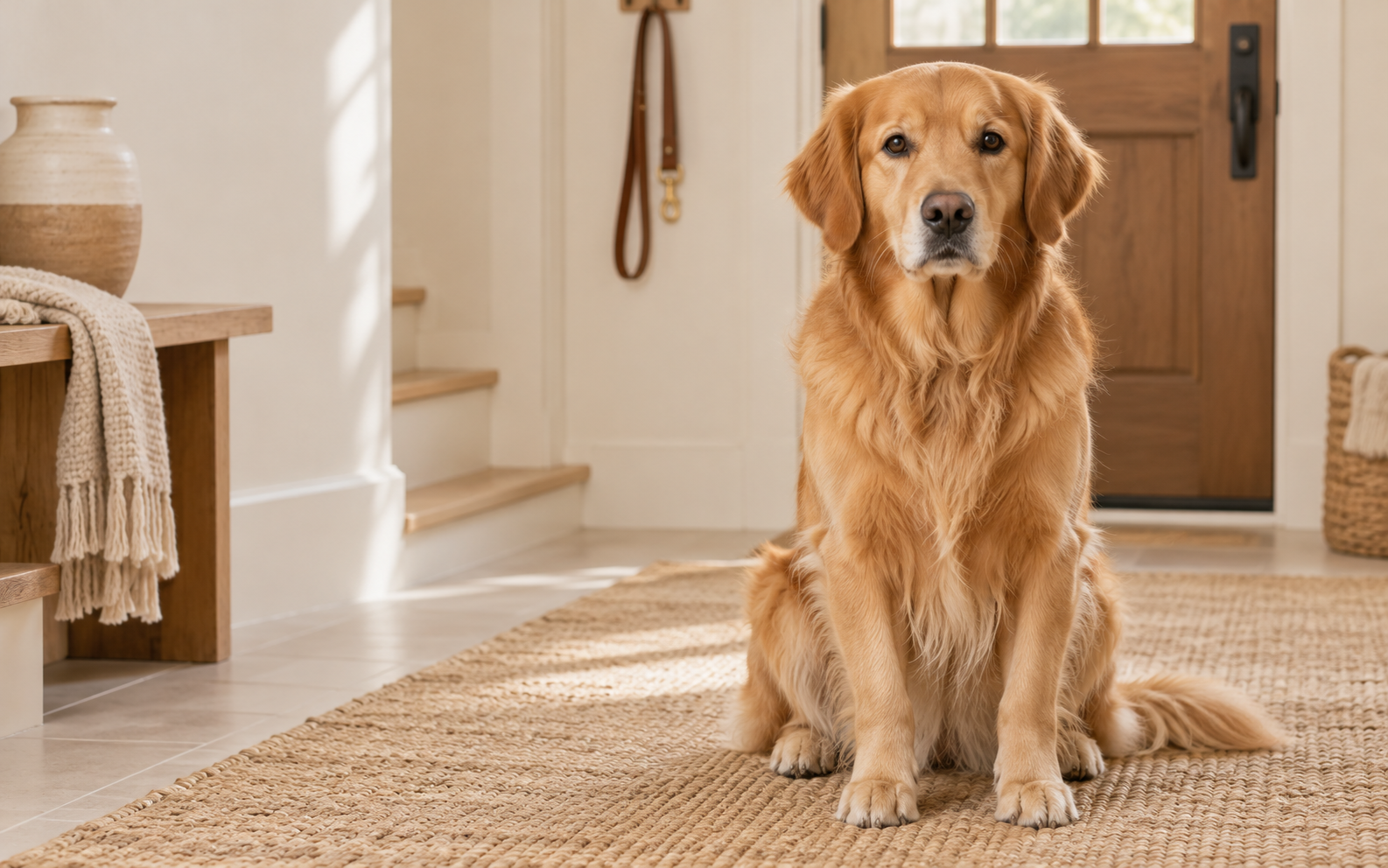
Coat care begins with knowing what is normal for your dog. Note the usual coat texture, shedding and tolerance for brushing. This gives you a better reference than a generic grooming calendar. Home care should remove loose debris and help you notice changes; it should not turn into a prolonged struggle with mats, sensitive skin or a frightened dog.
Choose the task before the brush
A rubber grooming tool, a pin brush and a comb do different jobs. Short coats may need loose hair lifted from the surface, while longer coats need careful checks for tangles. Match the tool to the coat and ask a groomer about technique before using a rake or cutting blade. Try a small area with light pressure. Redness, scratching from the tool or repeated flinching means you should stop and reassess.
Prepare a secure place to work
Use a nonslip surface at a height you can manage. Keep tools within reach so you do not leave a dog unattended on a raised table. Introduce the sound and touch of equipment in brief sessions before expecting a full groom. Break the task into manageable areas, allowing the dog to move away. Check the coat under collars and harness straps, where friction and trapped moisture may be easy to miss.
Handle knots without escalating the problem
Separate loose tangles gently only when the dog remains comfortable. Tight mats can conceal skin and require professional removal. Do not pull hard to meet a grooming schedule or put scissors under a mat you cannot see through. Extensive matting, sores or a sudden change in tolerance calls for help. A short professional trim may be kinder than trying to preserve every inch of coat at home.
Treat bathing as a separate decision
Use products appropriate for the dog and follow their instructions. If a skin condition is being treated, follow the veterinary plan rather than adding a strongly scented shampoo. Rinse thoroughly and dry as appropriate for the coat, without overheating the skin. Brush and inspect before bathing so hidden tangles are not ignored. Keep the floor safe while wet and prevent the dog from accessing cleaning products or electrical equipment.
Maintain tools and a simple record
Remove trapped fur and clean tools according to their care instructions. Check comb teeth, brush tips and handles for damage. Write down persistent knots, areas of sensitivity and any unusual odor or patchy hair loss. Those observations are more useful to a professional than saying the dog is simply difficult to groom. Keep routine grooming calm enough that small changes can be noticed early.
Sources and scope
This guide offers practical selection and setup checks. It does not claim hands-on testing of named products. Follow the exact product manual for installation and care; consult a veterinarian about changes in your pet’s health or behavior.