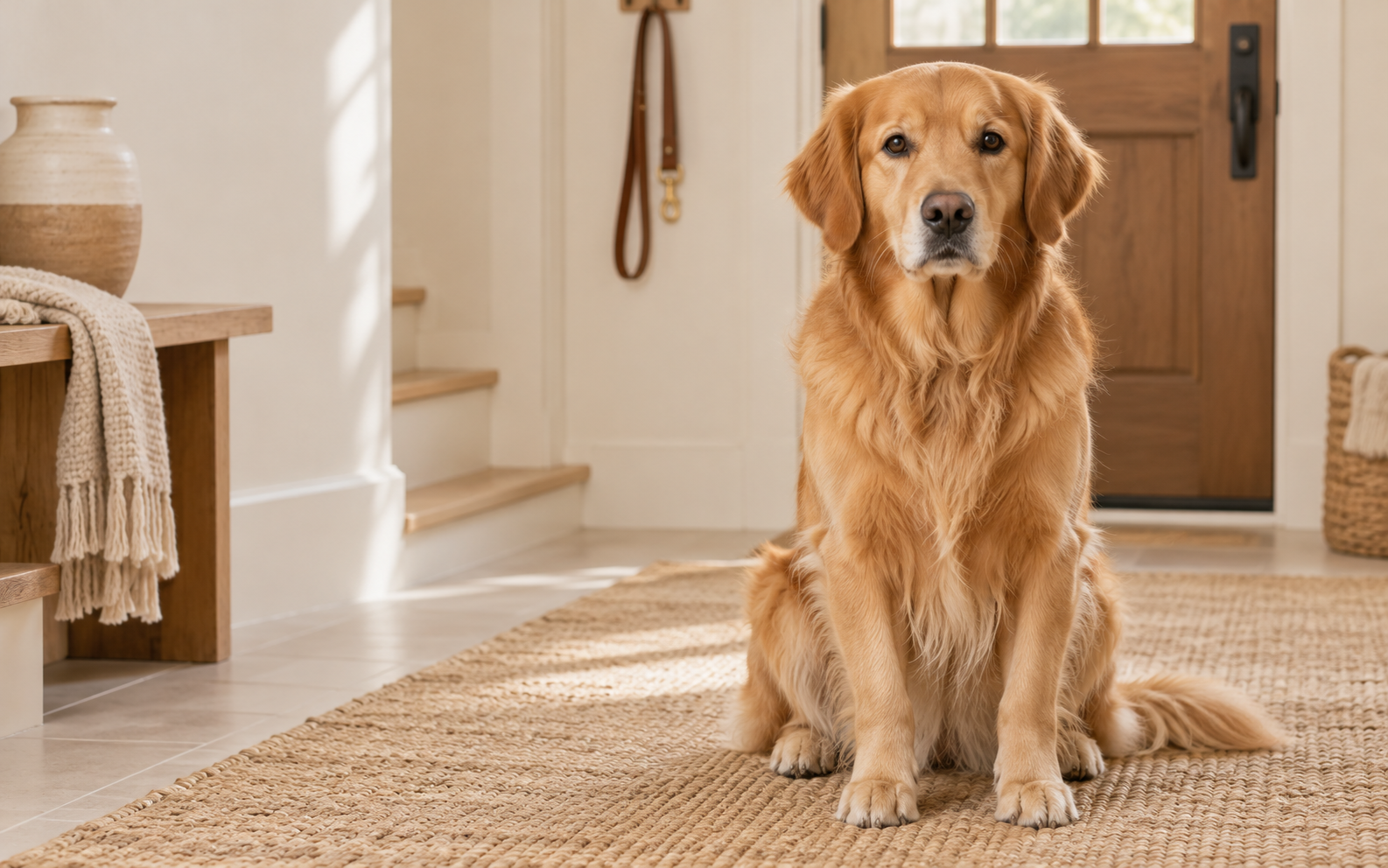
A leash takes little storage space, but it has a large effect on everyday handling. For a small home and a busy routine, the most useful leash is simple to grab, comfortable in the hand, appropriate for the dog’s size and training level, and easy to dry after wet walks. Length, material, clip design, traffic handle, and reflectivity matter more than novelty features.
Standard leash length
A fixed leash around typical walking length gives predictable control for sidewalks, building hallways, and neighborhood walks. Very short leashes can keep a dog too close to move naturally, while very long lines are difficult in crowded areas. Choose length according to the environment and local rules.
Long lines
Long lines are useful for training and controlled exploration in open areas, but they are not substitutes for a standard street leash. They can wrap around people, dogs, trees, or legs and should be handled with appropriate technique. Store them separately so they do not become a tangled pile in a small entryway.
Retractable leashes
Retractable leashes provide variable distance but reduce the handler’s direct control and can create thin-line hazards around people and animals. They are not ideal for every dog or environment. If used, choose one rated for the dog’s weight, inspect the tape or cord often, and lock it to a short length in crowded areas.
Nylon webbing
Nylon is lightweight, inexpensive, and available in many widths. It dries relatively quickly but can become rough or cause friction burns if it slides rapidly through the hand. Check stitching around the clip and handle and replace the leash when webbing is frayed or severely worn.
Polyester and climbing-style rope
Polyester webbing often feels a little softer and resists water well. Rope leashes can be comfortable and strong, but knots and sewn joins need inspection. A thick rope may be bulky for a toy breed and a thin rope may be uncomfortable with a powerful dog.
Leather
Leather leashes can soften with use and feel comfortable in the hand, but they need more care and take longer to dry. Keep leather away from persistent dampness and use care products appropriate for the material. Chewed or cracked leather should be replaced.
Biothane-style coated webbing
Coated synthetic straps are popular for muddy or wet conditions because they wipe clean easily. They can feel stiffer than fabric webbing and may become slippery when wet depending on texture. Check hardware attachment points and avoid leaving a coated leash folded tightly while damp.
Clip choice
Bolt snaps are common and convenient. Locking carabiner-style clips add security for dogs that twist or for activities where accidental release is a concern. Any clip should move smoothly, close fully, and match the dog’s size. Heavy hardware can swing against a small dog’s legs.
Traffic handles
A second handle close to the clip can help briefly shorten the dog near a road, elevator, or crowded entrance. It should not dangle so low that the dog steps through it. Use it as a temporary control point rather than keeping the dog tightly restrained for the entire walk.
Reflective details and night walks
Reflective thread or strips improve visibility when light hits them. They do not replace a dedicated light in very dark conditions, but they are useful in a busy urban routine. Check whether the reflective area remains visible when the leash is twisted.
Storage in a small entryway
Hang the daily leash on a hook close to the door with waste bags and the dog’s harness. Wet leashes should dry before they are placed in a closed drawer. Long lines need a larger hook or coil so they do not tangle with everyday gear.
Hand comfort
Try the handle with gloves if you walk in winter. A padded grip can be comfortable but takes longer to dry. Owners with limited grip strength may prefer a broader handle, but wrist-loop or hands-free systems should be used only when they allow safe control for the specific dog.
Inspect before every walk
Look for frayed webbing, broken stitching, cracks, bent hardware, and a clip that no longer snaps closed. Dogs that chew leashes can damage them internally before the weakness is obvious. Replace questionable equipment rather than waiting for complete failure outside.
Keep two purposes distinct
A leash for a narrow apartment entrance has different handling demands from a training line in an appropriate open area. Label and store them so another caregiver can choose correctly. Practice attaching the everyday leash with the door closed, then confirm the clip is fully seated before leaving. Avoid carrying several loose loops that can catch on furniture or another person. Good storage supports that routine rather than simply hiding the equipment.
Sources and scope
This guide offers practical selection and setup checks. It does not claim hands-on testing of named products. Follow the exact product manual for installation and care; consult a veterinarian about changes in your pet’s health or behavior.