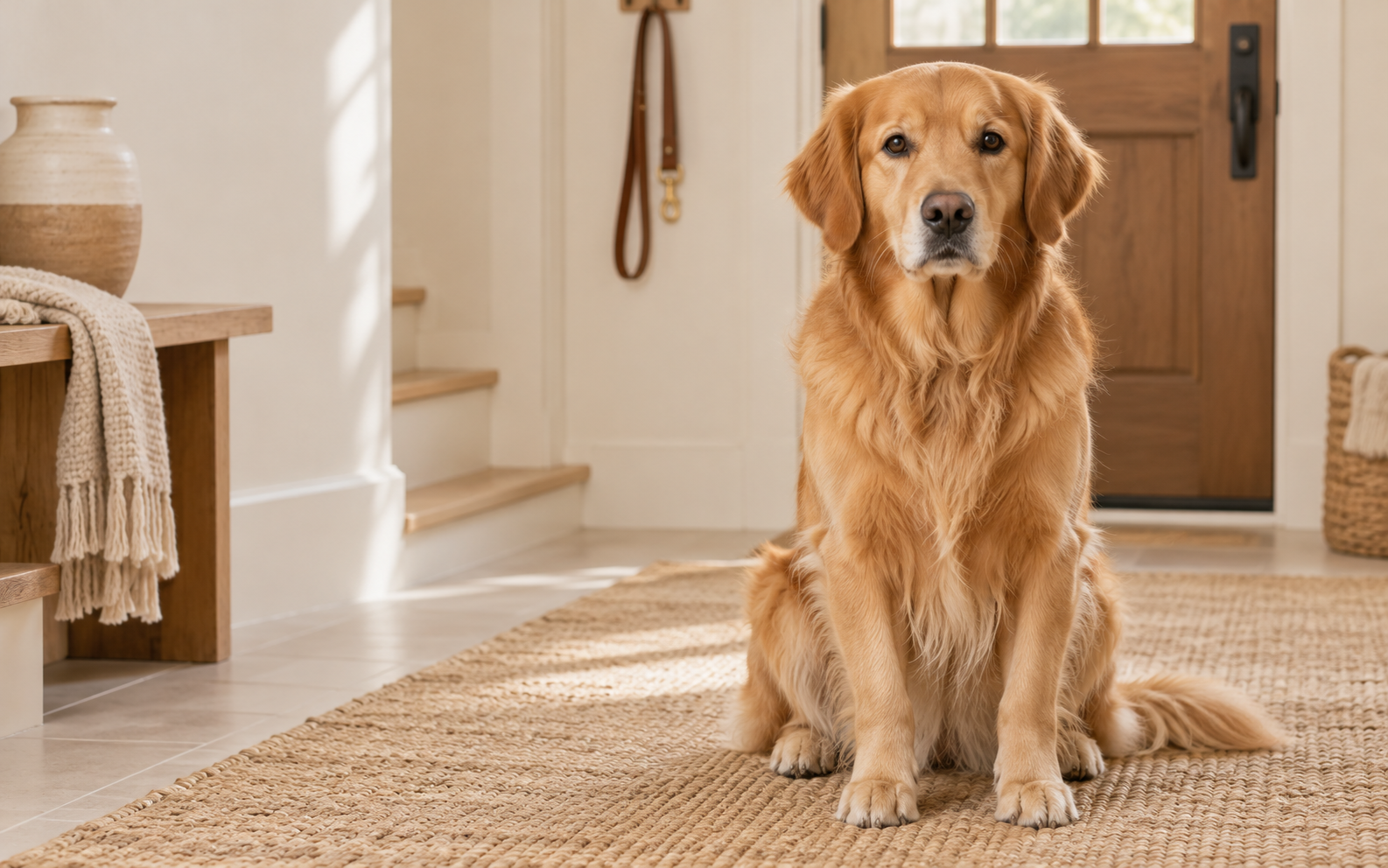
A good walk is not defined only by distance. It gives your dog an opportunity to move, explore and return home comfortably. Start from your dog's current abilities and the conditions outside. A predictable routine helps caregivers share the task, while enough flexibility lets you shorten or change a walk when the dog or environment calls for it.
Do a doorway check
Check the leash clip, collar or harness fit and identification before opening the door. Carry waste bags, water when needed and any items appropriate to the route. Make sure equipment is fastened to the intended attachment point rather than a decorative ring. If more than one person walks the dog, keep the same checklist beside the supplies. It is easier to notice a worn strap at home than after it fails near traffic.
Choose the route for this outing
Consider shade, surface temperature, traffic, visibility and places to step aside. A familiar short loop is useful when time or weather is limited. A quieter route can be a better choice for a dog that struggles with close encounters. Do not force greetings with other dogs or people. Leave enough distance to turn away without tension on the leash, and reward the dog for staying engaged with you.
Allow exploration without losing control
Sniffing can be part of the walk rather than an interruption to it. Pause in safe places where the leash will not cross a bicycle path or wrap around another person. Keep the dog away from discarded food and unknown substances. A longer line belongs in an appropriate open area, not automatically on a narrow sidewalk. The useful balance is room to investigate while you can still respond to a hazard.
Adjust to the dog and weather
There is no universal distance that suits every age and health condition. Watch for slowing down, reluctance, changes in gait or excessive exertion. Plan exercise with your veterinarian when health or mobility affects the decision. In difficult weather, choose safer timing and shorter outings rather than chasing a step count. Never use a new gadget to push through signs that the dog needs to stop.
Reset the supplies when you get home
Inspect paws and equipment for debris, then dry wet gear where it can air out. Refill the bag dispenser and note route problems for the next caregiver. If a walk repeatedly ends with the dog avoiding the harness or struggling to settle, review what happened rather than simply increasing the distance. A short log of conditions and behavior can reveal whether timing, route or equipment needs to change.
Sources and scope
This guide offers practical selection and setup checks. It does not claim hands-on testing of named products. Follow the exact product manual for installation and care; consult a veterinarian about changes in your pet’s health or behavior.