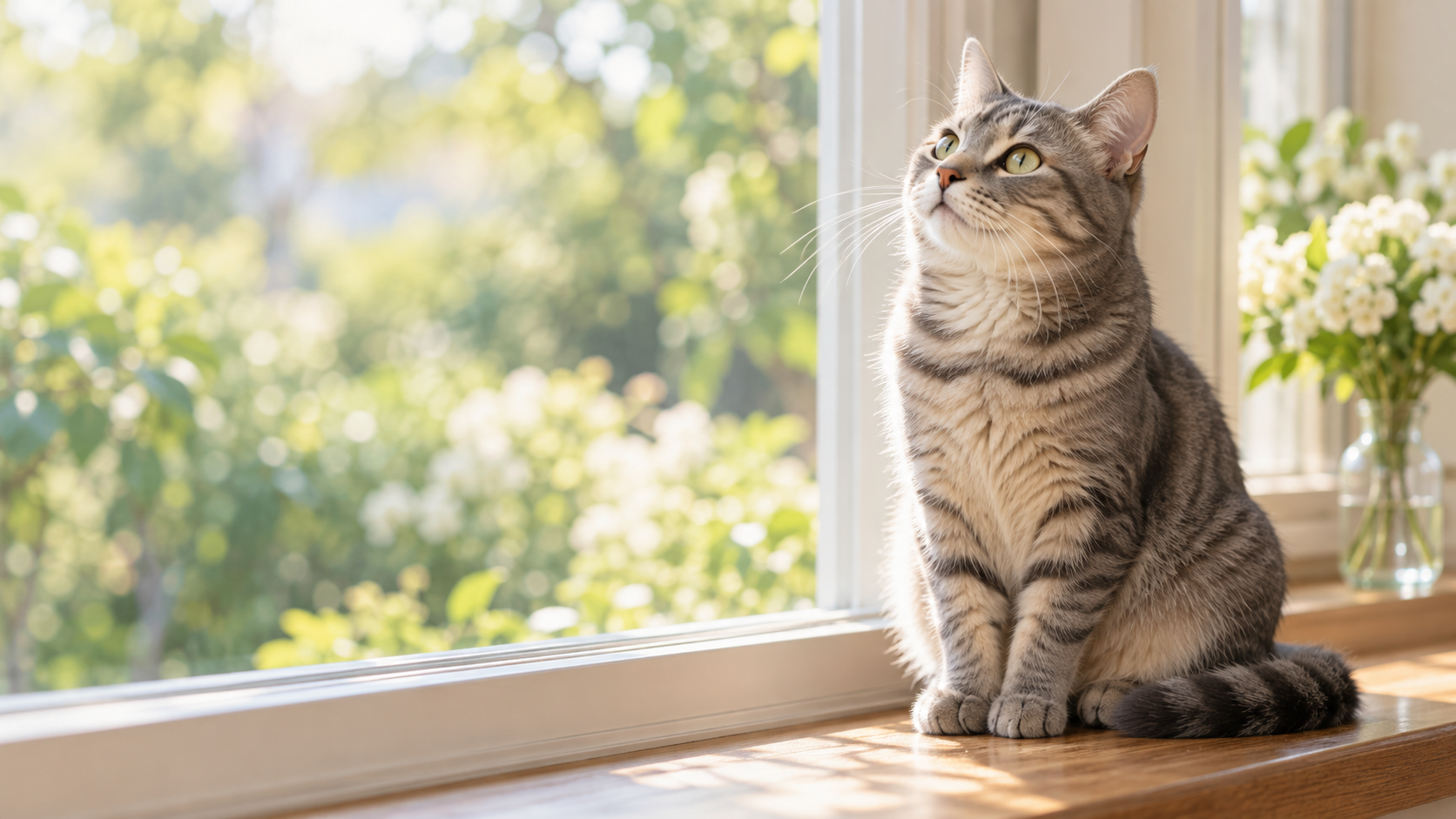
“Grey cat” is a visual description, not a single breed category. In cat genetics, the color often called grey is usually described as blue: a diluted form of black pigment. Several pedigreed breeds are well known for blue coats, while many mixed-breed cats can be grey without belonging to any particular breed. Coat color alone cannot reliably identify ancestry, temperament, or health. If you are trying to recognize a breed, look at documented pedigree, body type, coat texture, eye color, and registry standards rather than color by itself.
Why grey is often called blue
In cat terminology, “blue” usually means a cool grey coat created when a dilution gene changes the distribution of black pigment in the hair. The exact shade can range from pale silver-grey to deep slate. Lighting, coat length, undercoat, and sun exposure all affect how the color appears.
A cat can also be blue tabby, blue-and-white, blue tortoiseshell, or another patterned combination. Solid grey is therefore only one expression of diluted pigment.
Russian Blue
The Russian Blue is one of the breeds most strongly associated with a solid blue coat. Breed standards generally describe a short, dense double coat with a silvery appearance and vivid green eyes in mature cats. The body is elegant and moderately fine rather than heavy.
A grey short-haired cat with green eyes is not automatically a Russian Blue. Many domestic cats share those traits. Reliable identification requires pedigree documentation from a recognized registry or breeder records.
Chartreux
The Chartreux is a French breed known for a blue coat, a robust body, and copper to orange-toned eyes. The coat is short to medium in appearance, dense, and often described as woolly in texture. The head shape and substantial build distinguish it from the more refined Russian Blue.
Because both breeds can look solid grey in photographs, eye color and body structure are useful clues, but they still do not replace pedigree evidence.
Korat
The Korat is a naturally occurring breed from Thailand, traditionally associated with a silver-blue coat and green eyes. The head has a characteristic heart-like outline in breed descriptions, and the body is muscular despite a relatively compact appearance. The coat is typically single rather than the plush double coat associated with the Russian Blue.
Korats are uncommon in many countries, so a random grey cat is statistically much more likely to be a domestic shorthair than an undocumented Korat.
British Shorthair
British Shorthairs occur in many colors, but blue is one of the most recognizable. A blue British Shorthair usually has a dense plush coat, a round head, substantial cheeks, and a sturdy body. Eye color in blue cats is commonly copper or gold according to many breed standards.
The breed’s round build is quite different from the long, refined outline of the Russian Blue. Still, mixed-breed cats can also be round-faced, so physical resemblance alone is not proof of breed.
Nebelung
The Nebelung is a long-haired blue breed related in appearance and development to the Russian Blue. Its coat is medium-long, silky, and silver-tipped, with green eyes expected in mature cats. The tail forms a noticeable plume.
A grey long-haired rescue cat may resemble a Nebelung without having any connection to the breed. Domestic longhairs can display the same diluted black color and similar coat length.
Other breeds that can be blue
Many breeds permit blue among several accepted colors. Examples can include the American Shorthair, Oriental Shorthair, Persian, Maine Coon, Scottish Fold or Straight, and others depending on registry rules. In those breeds, blue is one color option rather than the defining feature.
Because standards differ among registries, check the current standard from the relevant organization if exact show terminology matters.
Domestic shorthair and domestic longhair
Most grey pet cats without pedigree papers are best described as domestic shorthairs or domestic longhairs. These are not single standardized breeds. They represent mixed ancestry and can vary widely in size, face shape, coat texture, and personality.
A domestic grey cat is no less distinctive or valuable as a companion. Breed labels are mainly useful when they are supported by documented ancestry.
Grey tabbies are not solid blue cats
A grey tabby usually shows stripes, spots, swirls, or ticking. The dark markings may be black with a paler background, or the entire pattern may be diluted to blue. Look for the typical tabby facial markings, including lines around the eyes and an “M”-like pattern on the forehead.
Solid blue cats should not show obvious adult tabby markings, although faint “ghost” stripes can be visible in kittens or certain lighting.
Blue-and-white and other combinations
White spotting can appear on a blue background, creating blue-and-white bicolor cats, tuxedo-like patterns, or larger white areas. Blue can also combine with cream in dilute tortoiseshell cats. These combinations describe color genetics and pattern, not breed.
If you are documenting a pet for identification, a clear phrase such as “blue-and-white domestic shorthair” is often more accurate than guessing a pedigree breed.
Does coat color predict personality?
There is no reliable basis for assigning an individual cat’s temperament from grey color alone. Breed populations may have general behavioral tendencies, but socialization, early experience, health, environment, and individual variation matter greatly. A mixed-breed blue cat may be bold, shy, vocal, quiet, social, or independent.
Choose a companion based on the individual cat’s behavior and your household, not a color stereotype.
Health considerations
A blue coat by itself is not a diagnosis and does not mean a cat has a specific health problem. Some pedigreed breeds have inherited conditions that responsible breeders screen for, but risks are linked to ancestry and breeding lines rather than simply being grey.
Any cat should receive routine veterinary care. Sudden coat thinning, dandruff, color change associated with poor hair quality, or excessive grooming deserves attention regardless of breed.
Grooming grey coats
Care depends more on coat length and texture than color. Short-haired cats may need only occasional brushing, while dense or long coats benefit from more frequent combing to prevent tangles and remove loose undercoat. Use gentle tools that reach the coat without scratching the skin.
Grey fur can show dandruff clearly, which makes skin changes easy to notice. Persistent flakes, redness, or itching should be discussed with a veterinarian rather than treated as a cosmetic issue.
How to identify a breed responsibly
If a cat came from a registered breeder, pedigree papers are the strongest evidence. If ancestry is unknown, compare features for interest but avoid presenting a guess as fact. DNA tests for cats may estimate ancestry or genetic markers, but results depend on the reference database and are not equivalent to registry pedigree documentation.
Shelters often use breed-like descriptions to help adopters visualize a cat. Those labels should be understood as appearance descriptions when no pedigree history exists.
Choosing a grey cat
If you are adopting, spend time with the individual cat. Ask about litter-box habits, comfort with handling, activity level, other pets, and medical history. A coat color you love is a reasonable preference, but compatibility and health are more important than whether the cat matches a breed photo.
Photography can exaggerate color differences
Phone cameras often shift grey coats toward blue, brown, or silver depending on white balance and indoor lighting. If you are comparing a cat with breed photographs, look at the animal in natural daylight as well as pictures. Silver tipping can sparkle in direct light, while dense plush coats may look darker in shadow. Color in a single photo is therefore a weak basis for identification.
What shelters mean by “Russian Blue mix”
Rescue listings sometimes use breed names to describe appearance rather than verified ancestry. “Russian Blue mix” may simply mean a short-haired grey cat with a slender build. This can be useful shorthand for adopters, but it should not be treated as a genetic conclusion. Ask the shelter what history is actually known.
Eye color changes in kittens
Young kittens often begin with blue-grey eyes that change as they mature. Adult eye color is more useful than kitten eye color when comparing breed standards. Even then, nutrition, lighting, age, and individual variation can affect how the iris looks in photographs.
Grey coats in mixed-breed families
Two non-grey parents can sometimes produce grey kittens when both carry the recessive dilution variant and the kitten also inherits the underlying black-based color. Littermates may therefore have very different colors while sharing the same parents. This is another reason coat color does not map neatly onto breed.
Adoption records
If you need a consistent description for a microchip record or insurance form, use visible features rather than an uncertain breed guess: coat length, blue or grey color, white markings, sex, and any distinctive pattern. Clear identification is more useful than a prestigious label that cannot be verified.
Final takeaway
Grey cats can be Russian Blues, Chartreux, Korats, British Shorthairs, Nebelungs, other pedigreed breeds, or—most commonly—domestic cats with diluted black pigment. Color is useful for description, but it cannot prove breed. Use pedigree records for formal identification and judge every cat by its own health, behavior, and needs.
Editorial reference points
Product specifications, prices and policies can change. Verify current manufacturer documentation before purchasing, and use a veterinarian or qualified species professional when a health or welfare concern is involved.
Compare the next decision or return to the complete 290-guide library.