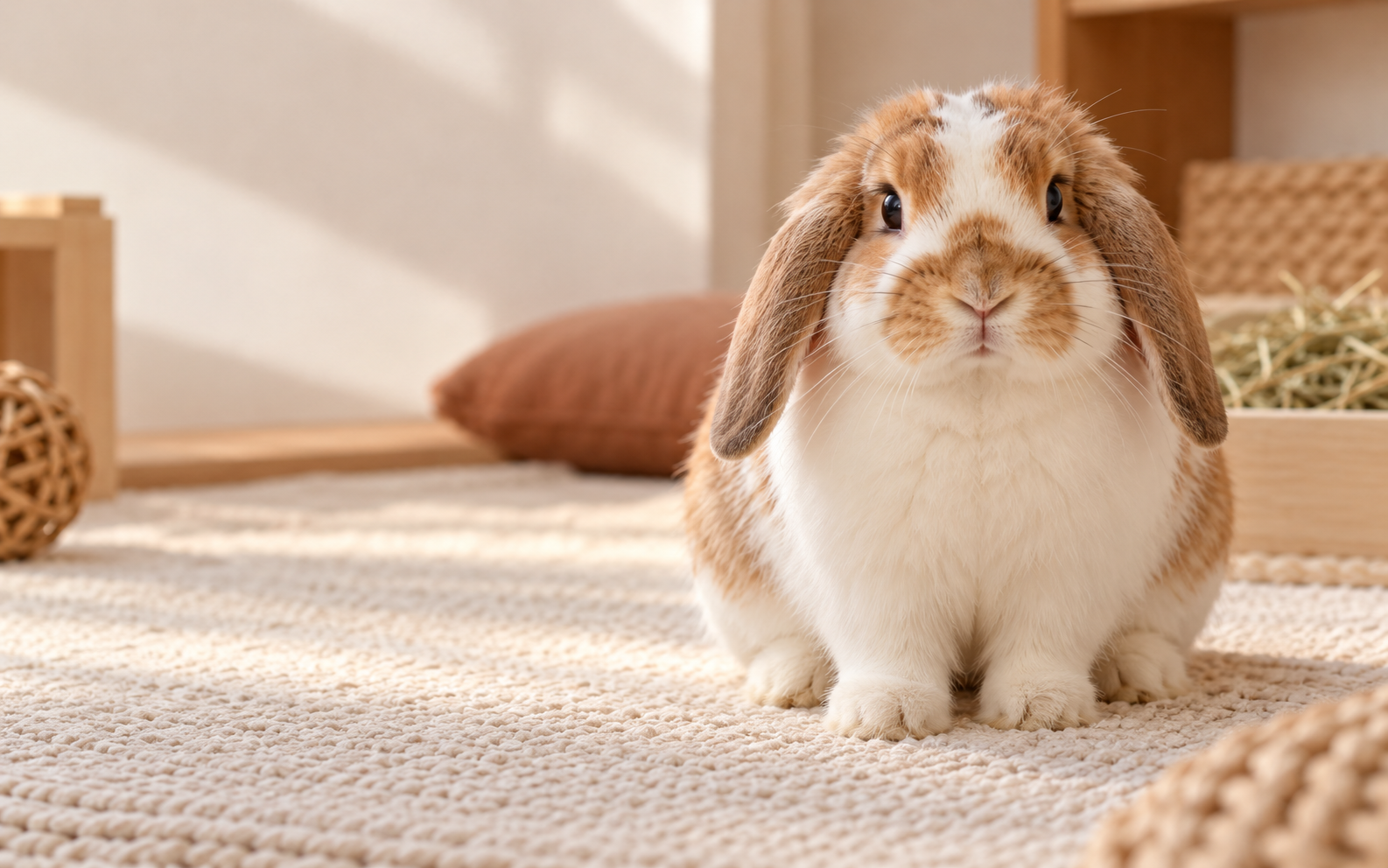
An indoor rabbit habitat has to do more than contain a rabbit. It should provide enough usable floor space for movement, an easy route to food and water, a comfortable toilet area, safe places to rest, and opportunities to explore without constant confinement. Many disappointing setups start with a product labelled as a rabbit cage and only later discover that the animal cannot stretch, run, or stand comfortably inside it.
House rabbits also interact with the room around the enclosure. Flooring, electrical cords, doors, other pets, and household traffic all affect whether the habitat is practical. These seven mistakes focus on everyday setup choices rather than a single brand or cage style. Welfare needs vary by rabbit and household, and significant changes in appetite, droppings, posture, or mobility warrant prompt veterinary attention.
Mistake 1: treating a small cage as the rabbit’s entire living space
A compact cage can be useful as a litter or feeding base in some arrangements, but it should not be assumed to provide adequate exercise space on its own. Rabbits need room to make several hops, stretch fully, change direction, and stand upright without hitting the top. Consider the total daily area the rabbit can use, including an exercise pen or rabbit-proofed room where appropriate. Measure usable floor space after litter boxes, hides, bowls, and hay are added. A habitat that looks spacious when empty can become cramped quickly once necessities occupy the corners.
Mistake 2: using slippery flooring
Smooth plastic, laminate, or tile can be difficult for a rabbit to grip, especially when accelerating or turning. Add stable, washable traction where needed, using materials the rabbit does not ingest or shred into dangerous pieces. Watch the hind feet during normal movement: repeated slipping, splayed legs, or reluctance to cross a surface suggests the footing is not working. Rugs and mats should lie flat with edges managed so they do not create a trip or chewing hazard. Older rabbits or animals with mobility problems may need extra attention to traction.
Mistake 3: placing the litter and hay areas for human convenience only
Many rabbits like to eat hay while using the litter box, so placing fresh hay within easy reach can support a tidy routine. The box itself needs an entrance the rabbit can use comfortably and enough room to turn around. A very high side may contain litter but become difficult for a small, senior, or arthritic rabbit. Observe where the rabbit naturally toilets before redesigning the whole habitat. Good placement reduces cleanup without forcing the rabbit to cross an awkward surface or squeeze into a corner to reach essential food.
Mistake 4: leaving cords and chewable household items within reach
Rabbit-proofing must extend beyond the pen wall. Electrical cords, chargers, baseboards, houseplants, foam mats, and fabric can all attract chewing. Route cables completely out of reach or protect them with an appropriate physical barrier rather than depending on a bitter spray alone. Check protection after cleaning or furniture changes, because a cable that was safely hidden can become accessible again. Plants should be identified for rabbit safety and moved away if there is any doubt. Supervision does not replace removing predictable hazards.
Mistake 5: providing only one hide with a single entrance
A hide should feel like shelter, not a trap. In shared habitats, multiple exits and more than one resting place allow rabbits to avoid blocking each other. Even a single rabbit may prefer a tunnel or box that offers a second route when something startling happens. Make sure openings are large enough for comfortable passage and that cardboard or wood hides are replaced when heavy chewing weakens them. Position shelter so the rabbit can rest away from constant foot traffic while still choosing to observe the room.
Mistake 6: putting the habitat in a noisy or temperature-unstable location
A living-room corner can work well, but not if it sits beside a loud speaker, in direct sun, against a radiator, or in a strong draught. Rabbits can be sensitive to heat, so room conditions and ventilation matter. Choose a location where the household can interact with the rabbit without turning every rest period into disturbance. Check how sunlight moves across the room during the day and make sure the rabbit can move away from warmer areas. A stable indoor environment is more useful than a decorative spot that looks convenient on a floor plan.
Mistake 7: changing the whole layout without watching how the rabbit responds
Rabbits often learn predictable routes between the litter tray, hay, water, hide, and exercise area. Major rearrangements can temporarily disrupt those habits. Change one or two elements at a time when possible, then check eating, toileting, movement, and resting behaviour. If the rabbit stops eating, produces fewer droppings, appears hunched, or shows other signs of illness, do not wait for the animal to 'get used to' a new habitat. Reduced appetite in rabbits can become urgent and needs veterinary advice.
Plan the doorway and cleaning route before buying barriers
A pen is easier to live with when a person can enter, sweep, replace litter, and carry hay without climbing over unstable panels. Check gate width, latch position, and the direction the door swings. If the setup sits in a multi-use room, leave a clear human walkway so bowls and pen edges are not constant trip hazards. Cleaning access also affects how often damp litter and scattered hay are actually removed. A habitat that is simple to service is more likely to stay consistently clean than one that requires moving half the furniture.
Create more than one comfortable resting surface
Rabbits change resting positions throughout the day. A firm non-slip mat, a washable rug, and a sheltered area can offer choice without filling every metre with soft bedding. Avoid assuming that a very plush bed is automatically preferred; some rabbits choose a cool, firm surface. Watch where the animal stretches out and where it avoids. If a rabbit develops sore hocks or changes posture, review flooring and seek veterinary guidance. Comfort comes from traction, dryness, space, and choice rather than from one padded accessory.
Review the habitat as the rabbit ages
A setup that works for a young agile rabbit may need adjustment later. Lower litter entrances, flatter routes, closer resources, and extra grip can preserve independence when mobility changes. Do not wait for repeated falls before considering access. At the same time, new reluctance to jump, move, groom, or use the litter box can indicate pain or illness rather than normal ageing. Environmental changes should support a veterinary assessment, not replace it. Keeping the basic layout flexible makes gradual modifications easier.
Keep hay and water easy to replenish without entering a tug-of-war
Daily care should be possible without moving the rabbit repeatedly or dismantling the pen. Place hay storage nearby but outside chewing reach, and choose a water bowl or bottle arrangement that can be cleaned and refilled easily. Heavy ceramic bowls can reduce tipping for some rabbits, while a well-maintained bottle can provide a second source if that suits the animal. Check water delivery every day. Convenience for the caregiver matters because awkward routines are more likely to be skipped, especially when several people share responsibility.
Protect the habitat from other household pets
A dog or cat that appears calm can still frighten a rabbit by staring, pawing at the pen, or rushing the barrier. Supervise introductions carefully and provide the rabbit with areas where visual contact can be avoided. A pen should not be relied on as the only protection from a determined larger animal. Use closed doors or additional separation when no one is present if needed. The rabbit should be able to eat, rest, and use the litter area without constant vigilance around another pet.
Leave enough open space for movement after enrichment is added
Tunnels, boxes, chew items, and platforms are useful only if they do not turn the floor into an obstacle course. Keep a clear route where the rabbit can move at speed and stretch out. Rotate some enrichment rather than keeping every object in the pen at once. This also makes cleaning easier and helps old items feel interesting again. When adding a new box or tunnel, check that it cannot trap the rabbit in a corner and that openings remain large enough for easy passage.
Check doorways after every room change
Moving a sofa, storage box, or pen panel can change the width of an escape route. After rearranging furniture, walk the rabbit’s normal path and look for new narrow gaps, sharp corners, or places where the animal could become trapped. A habitat should remain easy to navigate even when the room around it changes.
Final takeaway
Think of an indoor rabbit habitat as a living area rather than a container. Prioritise usable floor space, traction, safe chewing boundaries, accessible hay and litter, secure hiding places, and a stable room location. Make the enclosure easy for people to clean without forcing the rabbit through constant redesign. Most importantly, use the rabbit’s movement, appetite, droppings, and resting choices as ongoing feedback about whether the setup still works.
Editorial reference points
- Association of Exotic Mammal Veterinarians — owner resources
- Association of Reptile and Amphibian Veterinarians
Product specifications, prices and policies can change. Verify current manufacturer documentation before purchasing, and use a veterinarian or qualified species professional when a health or welfare concern is involved.
Compare the next decision or return to the complete 290-guide library.