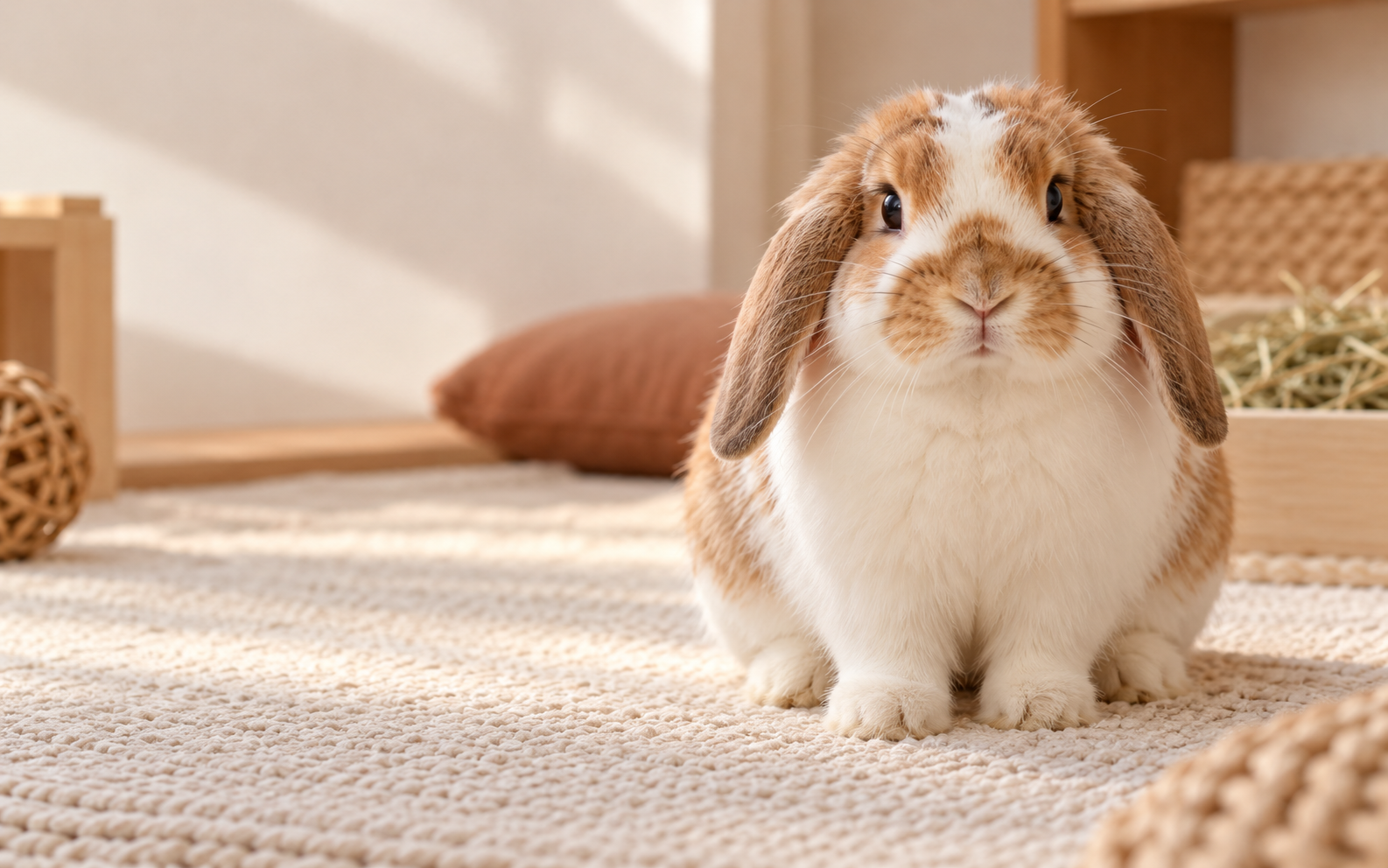
An indoor rabbit habitat works best when daily cleaning and structural maintenance are treated as part of the same routine. Rabbits produce large amounts of hay debris, shed fur, scatter litter, and may chew the very barriers and furnishings that define their space. Keeping the area clean is important, but so is preserving traction, safe hiding places, comfortable resting areas, and room for movement.
This guide focuses on practical maintenance for indoor pens, exercise areas, litter setups, flooring, hides, and feeding zones. Rabbits have individual habits, and medical issues can change toileting, appetite, or mobility quickly. If a rabbit suddenly stops eating, produces fewer droppings, seems painful, or shows a major change in normal behavior, cleaning the enclosure is not a substitute for prompt veterinary advice.
Divide the habitat into functional zones
Maintenance becomes easier when the rabbit's space has recognizable areas for littering, hay, water, resting, and active movement. A litter box with hay nearby tends to concentrate much of the daily mess in one place. Rest areas can then stay drier, and flooring in open exercise zones is easier to sweep.
The zones do not need walls. Their purpose is to make it obvious where mess accumulates and which materials need different cleaning methods. A washable rug may suit a resting area, while a waterproof mat beneath a litter box protects the floor from spills.
Remove wet litter and spoiled food every day
Check litter boxes at least daily and remove areas that are saturated or heavily soiled. The exact replacement schedule depends on litter type, box size, number of rabbits, and toilet habits. Hay that has fallen into a dry box is not automatically dirty, but hay mixed with urine or wet litter should be discarded.
Remove fresh vegetables or other perishable food that has been left long enough to wilt or spoil. Dry pellets scattered onto a clean floor can often be swept up, but anything damp or contaminated should be thrown away. Keeping these tasks small and frequent prevents a larger odor problem later.
Sweep hay and fur before wet cleaning
Dry debris is easier to remove before using water. Sweep, vacuum with an appropriate attachment, or gather loose hay and fur from floors, corners, and under furniture. Rabbits can be sensitive to loud appliances, so use a method the rabbits tolerate and move them to a comfortable area if necessary.
Pay attention to edges along pens and walls where fur accumulates. During shedding seasons, daily fur removal may reduce the amount that sticks to fleece, rugs, and baseboards. Hair that is allowed to become wet is much harder to clean.
Clean litter boxes thoroughly on a regular schedule
Empty the box, discard used litter, and wash the container with warm water and a mild cleaning product suitable for the material. Mineral deposits from urine can build up on plastic over time. For stubborn residue, follow rabbit-safe cleaning guidance and rinse thoroughly before refilling.
Inspect the litter box for cracks, rough edges, or a rim that has become difficult for the rabbit to enter. Senior or mobility-limited rabbits may need a lower entry. A clean box that is physically difficult to use will not solve litter habits.
Keep hay areas dry and generous
Hay is central to a rabbit's daily routine, and many rabbits prefer to eat while using the litter box. Keep the hay source positioned so it does not become soaked with urine or water. Refill frequently enough that fresh hay remains available and easy to reach.
Hay racks and bags should be checked for unsafe openings, frayed fabric, or mounting hardware that can catch fur or limbs. An open hay pile or box can be simpler to clean and easier for some rabbits to access. Whichever system you use, discard damp or moldy hay.
Wash food and water dishes consistently
Rinse and wash water bowls daily or whenever they become contaminated with hay, fur, or food. Heavy ceramic bowls are popular because they are difficult to tip, but check them for chips. Water bottles, if used, need nozzle and seal checks as well as routine washing.
Food bowls should be cleaned according to what they contain. A bowl used only for dry pellets may need less scrubbing than one used for wet greens or medication mixed with food. Do not allow residue to build into a sticky film around the rim.
Protect flooring from urine and digging
Indoor rabbits need secure footing. Smooth tile or laminate can be slippery, while loose rugs may bunch under running feet. Use washable, rabbit-appropriate floor coverings that provide traction and are easy to inspect.
Under litter boxes and water stations, a waterproof layer can protect the household floor. Check beneath mats regularly; liquid can travel under the edge and remain hidden. If the rabbit chews foam, rubber, or backing material, replace the flooring setup with a safer alternative rather than continually patching it.
Launder rugs and fleece completely
Shake hay and fur from washable fabrics before putting them into a washing machine. Follow the textile care label and avoid strong fragrances when a simpler detergent is sufficient. Dry thick rugs and fleece fully before returning them to the habitat.
Keep a second set of floor coverings if laundry takes a long time. Rotating clean sets allows the rabbit's space to remain functional while wet items dry. Inspect fabric for holes and loose threads that could be chewed or caught around nails.
Clean hides, tunnels, and platforms by material
Plastic hides can often be wiped or washed with mild soap. Fabric tunnels may need laundering. Cardboard hides are inexpensive and chewable but cannot be sanitized once heavily soiled; replace them when damp, dirty, or structurally weak.
Wooden hides and platforms need special attention because wood absorbs moisture. Brush away dry debris and follow the maker's cleaning instructions. Replace wood that remains urine-soaked, splintered, swollen, or difficult to keep dry. Do not apply an unknown varnish or household chemical to a surface the rabbit may chew.
Inspect exercise pens and barriers
During cleaning, run your hand and eyes along pen panels, connectors, gates, and floor guards. Look for bent wires, sharp ends, loose clips, chewed plastic, and gaps that have widened. Gates should open and latch smoothly without pinching fabric or fur.
If the pen shifts on the floor, add stability in a way that does not create protruding hardware inside the rabbit's space. Zip ties and clips should be trimmed or positioned so ends are inaccessible. Rabbits can find and chew small plastic parts that humans overlook.
Protect household walls and baseboards
Chewing and urine marking can damage baseboards and painted walls. Use rabbit-safe physical barriers rather than relying on sprays alone. During weekly cleaning, inspect behind barriers for trapped hay, moisture, and chew damage.
If a rabbit has reached electrical wiring, remove access immediately. Cord covers are not a guarantee against persistent chewing; routing wires completely outside the rabbit's reach is safer. Habitat maintenance includes maintaining the room around the pen, not just the pen itself.
Clean under furniture and resting spots
Rabbits often push hay and droppings under low furniture. Move lightweight hides and mats during routine cleaning so debris does not accumulate underneath. For large furniture, use a narrow vacuum attachment or long-handled brush if it can be done without frightening the rabbits.
Hidden areas are also where damp patches may go unnoticed. Check beneath water bowls, litter boxes, and washable pads more often than dry resting zones.
Manage shedding season proactively
During heavy shedding, fur can collect in corners within hours. Sweep frequently and groom the rabbit according to coat type and current veterinary or grooming guidance. Removing loose fur from the environment also makes it easier to see droppings, food waste, and damp litter.
Do not use sticky lint products where adhesive can contact the rabbit. Clean grooming tools separately and store them outside the living area when not in use.
Use pet-safe cleaning products carefully
Routine cleaning usually does not require harsh chemicals. Mild soap and water are sufficient for many surfaces. If you use a disinfectant, confirm that it is suitable for the surface and animal environment, follow dilution and contact-time instructions, rinse when directed, and keep rabbits away until the area is safe and dry.
Never mix cleaning chemicals. Strong fumes in an enclosed room can irritate both people and animals. Ventilate the area appropriately and store all cleaning products securely outside the rabbit's reach.
Maintain good ventilation without drafts
Fresh air helps the room stay comfortable, but the rabbit's resting area should not sit in a strong cold or hot draft. Clean air vents and fans according to household schedules so dust and fur do not build up. Fans should be positioned where cords and blades are inaccessible.
If odor remains strong despite daily litter care, investigate the source rather than masking it with fragrance. A wet rug, hidden urine under a box, dirty litter tray, or spoiled food is more likely to be the cause than a need for room deodorizer.
Adapt the habitat for senior or disabled rabbits
A rabbit with reduced mobility may spend more time in one area and require more frequent spot cleaning. Use low-entry litter boxes, absorbent washable pads where appropriate, and flooring with reliable traction. Keep food, hay, and water within easy reach.
Check skin and fur cleanliness as part of daily observation. Persistent urine or fecal soiling on the rabbit itself can be a medical or mobility concern and deserves veterinary guidance rather than repeated bathing at home.
Maintain pairs and groups with enough resources
Two rabbits can produce more than twice the mess in a shared favorite corner because they may use the same litter box and hay station. Provide enough box space, hay access, water points, and resting areas that one rabbit cannot block the other.
During cleaning, avoid separating bonded rabbits unnecessarily. Move them together to a safe exercise area if the main habitat needs to be emptied. Restore familiar items and layout where possible so the cleaned space still feels recognizable.
Use a weekly deeper-clean checklist
Beyond daily litter and food cleanup, choose a regular time to wash litter boxes, launder rugs, wipe pen panels, clean bowls, inspect hides, sweep under accessories, and check the household floor beneath protective mats. Rotate tasks if doing everything at once disrupts the rabbits too much.
A checklist is useful because maintenance problems are often structural rather than dirty: a loose connector, chewed corner, chipped bowl, or worn rug can be caught before it causes an injury or escape.
Know when an item should be replaced
Replace litter boxes with cracks or sharp rims, fabric with dangerous holes or loose threads, wooden items that stay saturated or splinter, heavily chewed plastic, and barriers that no longer remain secure. A product does not need to look new, but it should still be cleanable and structurally sound.
An indoor rabbit habitat is easiest to maintain when cleaning supports the way rabbits actually live. Daily spot care keeps litter and food mess under control, while weekly inspection protects floors, barriers, furniture, and enrichment items. The result should be a space that stays dry, provides traction, offers abundant hay, and remains safe for running, resting, chewing, and exploring.