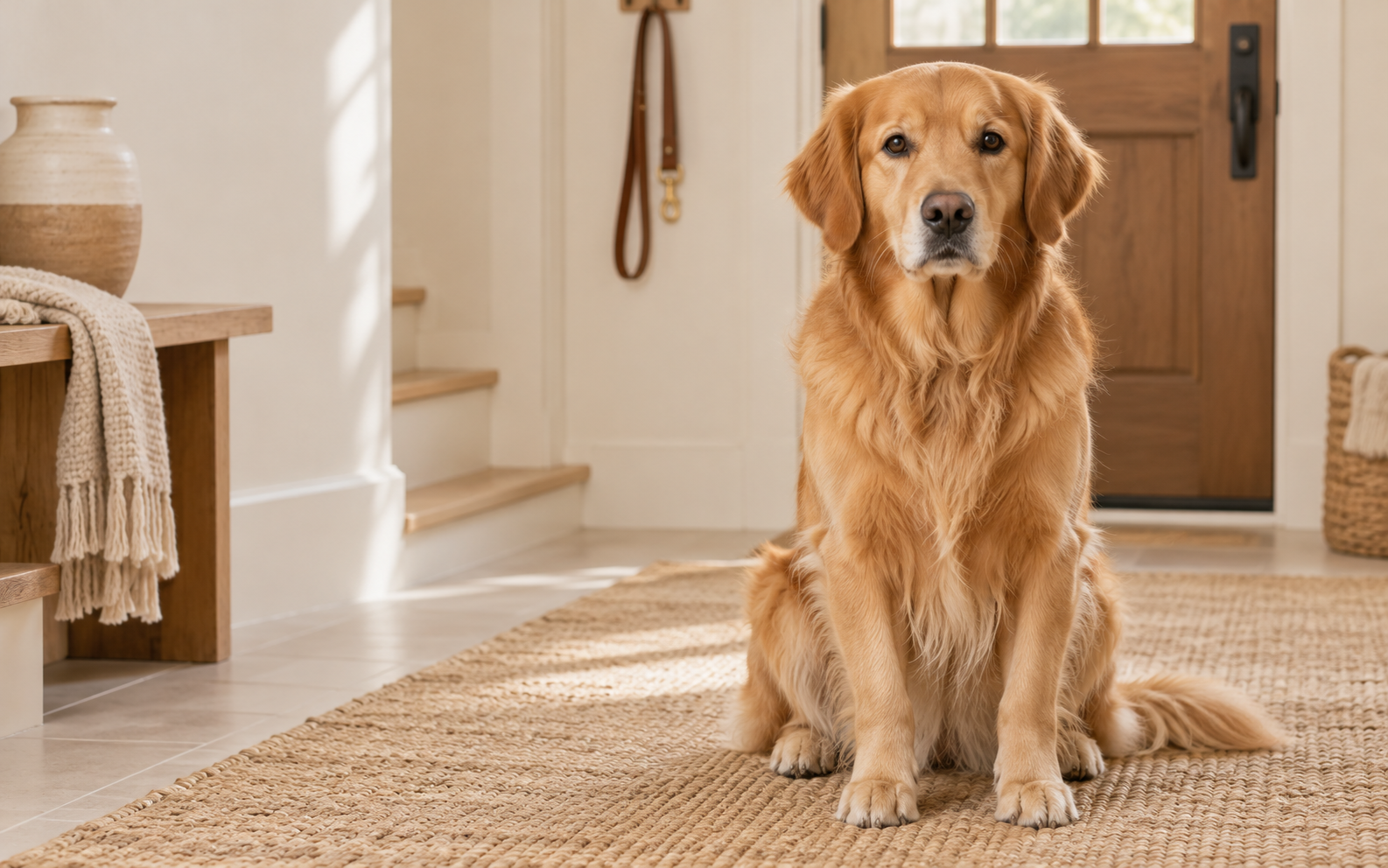
Compare harnesses by strap placement, adjustment, fastening and movement, then check the fit on the dog rather than relying on a size label.
Measure for the exact design
Use the manufacturer’s measurement points and compare the dog with that model’s chart. Broad labels such as medium are not interchangeable between brands. Record the measurements and where they were taken. If the dog falls between sizes, examine the available adjustment range instead of assuming the larger harness will become secure when tightened.
Watch the route of the straps
Consider where material sits at the chest, neck and behind the front legs. Look for twisting, gaps and friction during ordinary movement. A harness that looks neat while the dog stands still may shift when it turns or lowers its head. Avoid treating a product photograph as evidence of comfortable movement on your individual dog.
Compare the fastening routine
Over-the-head and step-in designs place different demands on the handler and animal. Practice calmly indoors, checking that buckles close fully without trapping hair. Think about the caregiver who will use it while carrying other walking supplies. A complicated arrangement that is frequently misrouted is a practical reason to reconsider the design.
Separate walking from vehicle use
An everyday walking harness should not be described as crash protective without evidence for that exact purpose and model. Follow the instructions for each intended activity. Decorative loops and accessory mounts are not automatically leash attachment points. Keep the normal leash connection easy to identify for everyone who walks the dog.
Plan inspection and refitting
Inspect structural seams, hardware and chewed areas before use. Recheck adjustment after washing, growth or a change in the dog’s condition. Replace unreliable components rather than hiding wear under a cover. The searches below distinguish harness constructions and adjustment options, leaving the final decision to a supervised fit and movement check.
Example: a neat fit that rotates while turning
Check strap routing and permitted adjustment first. Observe an indoor turn and ordinary movement again. If the harness still rotates or rubs despite correct use, record where the problem occurs and compare a different construction. Tightening every strap indefinitely is not an adequate fit strategy. Keep the animal’s movement, attachment points and caregiver routine in the same decision.
Sources and scope
This guide offers practical selection and setup checks. It does not claim hands-on testing of named products. Follow the exact product manual for installation and care; consult a veterinarian about changes in your pet’s health or behavior.
Compare relevant options on Amazon
Affiliate disclosure: As an Amazon Associate I earn from qualifying purchases.
These links open category searches, not individual product recommendations or verified deals. Check each result’s exact model, instructions and seller terms.