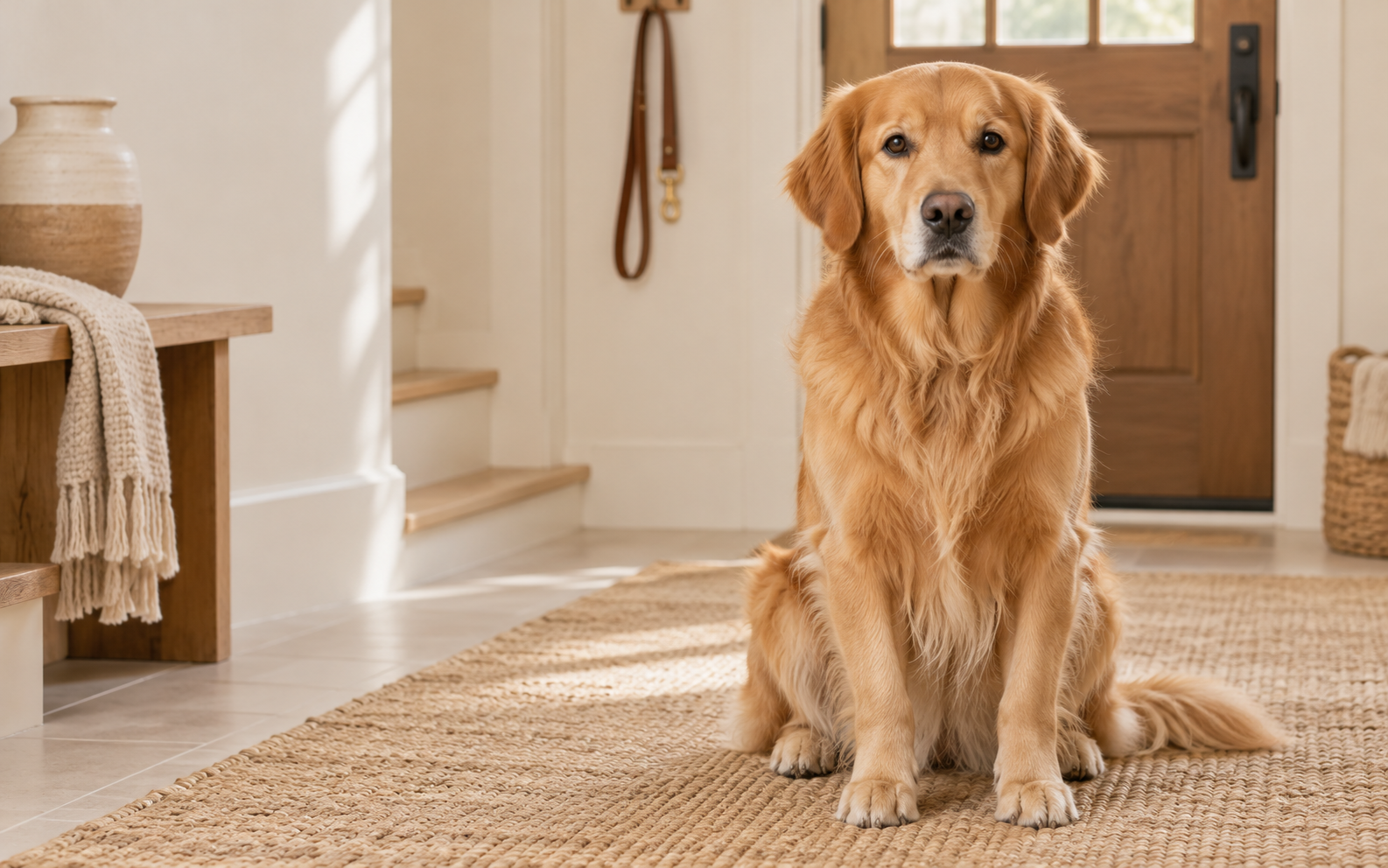
Choose a daily leash for the walking environment, comfortable handling and dependable hardware, then plan how it will be checked and stored.
Describe the ordinary walk
A narrow entrance, busy sidewalk and open training area place different demands on leash handling. Write down the most common environment before selecting length or format. A long line can be useful for a defined activity but cumbersome in a crowded doorway. Keep purpose-specific equipment distinct so another caregiver does not choose the wrong tool in a hurry.
Try the handle and weight
Assess the handle with the clothing or gloves normally worn. Heavy clips and thick webbing may feel different when attached to a small dog. Consider how excess length will be managed without loose loops catching furniture or people. Comfort matters for both routine walking and the moment when the handler must respond promptly.
Examine the entire load path
Look at the handle attachment, webbing or rope, stitched joins and clip. Check how the gate closes and whether it can become trapped in an awkward position. A strong-looking metal clip does not compensate for damaged stitching. Use equipment appropriate to the dog and intended activity, following the maker’s limitations.
Compare care and repair options
Water, grit and chewing affect different materials differently. Read cleaning and drying instructions before choosing leather, coated material or textile webbing. Retractable mechanisms have their own maintenance limits. Keep a sound spare for laundry or damage; a knot or decorative cover should not be treated as an established structural repair.
Practice the departure sequence
Attach the leash with the exterior door closed, verify the clip and organize anything else you carry. Store dry gear where it is easy to inspect before leaving. Replace unreliable hardware rather than working around it. The links below distinguish everyday fixed leads and task-specific alternatives, not a claim that one design suits every dog.
Example: different people walk the same dog
One handler may prefer a padded loop while another wears bulky gloves. Have both assess the handle and clip while indoors. Choose an everyday lead both can operate reliably, or clearly distinguish appropriate alternatives for their tasks. Avoid leaving a long training line as the default simply because it is closest to the door. Storage labels can be as useful as another accessory.
Sources and scope
This guide offers practical selection and setup checks. It does not claim hands-on testing of named products. Follow the exact product manual for installation and care; consult a veterinarian about changes in your pet’s health or behavior.
Compare relevant options on Amazon
Affiliate disclosure: As an Amazon Associate I earn from qualifying purchases.
These links open category searches, not individual product recommendations or verified deals. Check each result’s exact model, instructions and seller terms.