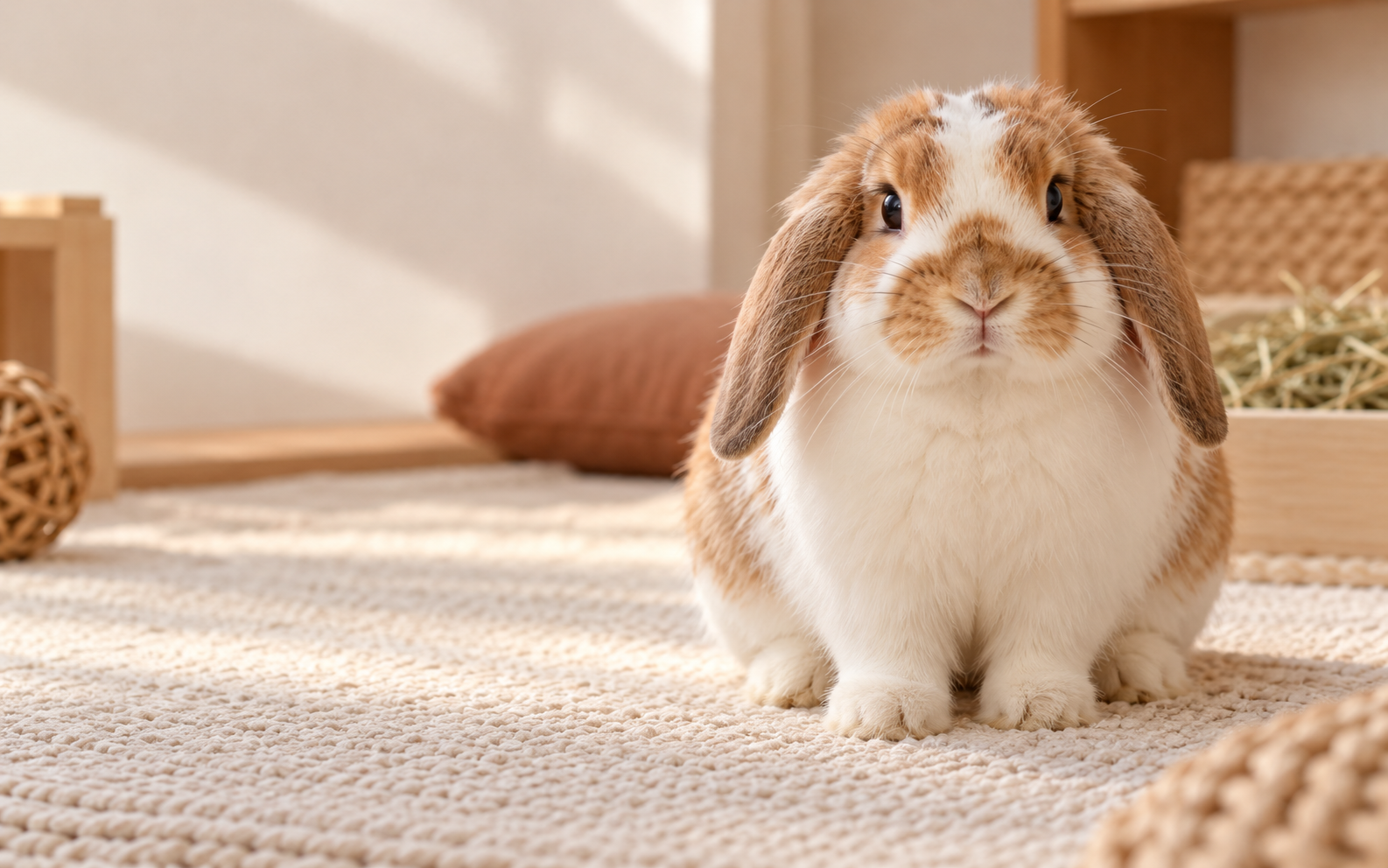
A hay feeder for guinea pigs should make hay easier to access, not ration it. Guinea pigs need continuous access to appropriate grass hay, and social animals need enough feeding space that one individual cannot control the entire resource. The best design is therefore generous, safe, low enough for a natural posture, and simple to refill and clean.
Many racks are sold mainly as mess-reduction tools. Tidiness can be helpful, but it should remain secondary to feeding behaviour. A little scattered hay is preferable to a narrow feeder that leaves clean hay trapped behind openings the animals cannot comfortably use.
Start with safe opening size and shape
Any gap around a hay rack should be assessed for the smallest guinea pig in the group. Avoid openings where a head, jaw, foot, or limb could become trapped. Flexible fabric and wire can change shape as they wear, so inspect them repeatedly rather than only on setup day. If a rack has been chewed, bent, or stretched, replace it. Do not add loose strings or wire ties inside the enclosure to repair a questionable feeder.
Keep hay at a comfortable eating height
Guinea pigs should not need to stand vertically or crane the neck upward for normal access. Low side access supports a more natural posture and reduces hay falling into the eyes from above. Observe how the animals position themselves during several quiet feeding periods. If they repeatedly pull the rack down, climb into it, or give up while hay remains, the arrangement is not serving its purpose.
Provide several access points for a group
Two or more guinea pigs may eat at the same time. A single narrow hole can become a guarded resource even in a group that usually gets along. Choose a wide opening, multiple feeding faces, or more than one hay station. Position them so a submissive animal has an exit route rather than becoming trapped in a corner by a confident companion. Watch actual feeding rather than assuming a larger rack automatically solves competition.
Choose capacity for freshness, not maximum storage
An enormous feeder can encourage the household to top up old hay for days. A useful capacity holds enough for regular access between normal refills while still making it easy to remove compressed, dusty, damp, or soiled material. Refill with fresh hay at least as often as husbandry requires and discard questionable hay. The feeder should not become long-term storage inside the enclosure.
Protect hay from water leaks and toilet areas
Place the station away from a dripping bottle, splash-prone bowl, or heavily soiled corner. Damp hay can spoil quickly. Check underneath and behind wall-mounted racks, where fragments may collect unnoticed. If the guinea pigs frequently toilet in the hay area, a tray or floor pile that can be replaced easily may be more practical than a fabric feeder that is difficult to wash and dry.
Prefer construction that is easy to inspect
Simple rigid designs make damage obvious. Fabric bags can work in some setups, but seams, hanging loops, and access holes need close inspection for fraying. Wooden racks can be chewed and may absorb moisture. Plastic can develop rough edges. There is no maintenance-free material, so choose the construction whose wear you can see and whose cleaning method fits the household.
Do not use a rack to reduce hay consumption
Hay should not be made deliberately difficult to reach as a way to control waste or body weight. If a guinea pig needs a dietary or weight-management plan, discuss it with a knowledgeable veterinarian. Restricting normal hay access can create health risks. The feeder’s job is organisation and clean presentation, not rationing an essential part of the diet.
Compare any rack with a simple floor-level hay area
A clean pile or tray is a useful benchmark. If the guinea pigs eat more comfortably, forage longer, and show less competition around an open hay area, that information matters. Some households combine a safe rack with a generous floor pile so the animals have both clean reserve hay and natural foraging. The exact arrangement can be adapted as long as access remains continuous and the hay stays reasonably dry and fresh.
Use refilling time to observe appetite
Hay disappears gradually, so a sudden drop in use may be easy to miss. Watch each guinea pig at the feeder and note whether one animal is eating less, dropping strands, or avoiding a side of the mouth. Reduced appetite can become serious quickly in guinea pigs. If eating or droppings change noticeably, seek veterinary advice promptly rather than assuming the animal is bored with the hay rack.
Leave room around the station for normal movement
A large feeder can narrow a small enclosure or block a hide entrance. Place it where several animals can gather without blocking the main route. Hay, water, hides, and resting areas should form a usable layout rather than a line of equipment pressed against every wall. Enough open movement space supports social choice and makes routine cleaning easier.
Check whether the feeder encourages a natural head position
A guinea pig should be able to reach hay with all four feet on a stable surface. Designs that require prolonged stretching upward or force the head through a narrow hole can make eating awkward. Watch the angle of the neck and shoulders rather than judging height from outside the enclosure. A low rack with a generous opening often works better than a tidy elevated bag that looks attractive to the owner.
Use two stations when group dynamics are uncertain
Even a wide feeder can be dominated by one assertive guinea pig. Adding a second hay location across the enclosure creates another option and makes it easier to see whether access, rather than appetite, is limiting another animal. Keep both stations equally fresh so one does not become a second-class resource. In a bonded pair or group, redundancy is often simpler than trying to engineer one feeder that every animal must share.
Keep loose hay from blocking other equipment
Hay pulled from a rack can collect around water bottles, bowl bases, hide entrances, and ventilation areas. A shallow tray or designated feeding zone can contain some mess without restricting access. During daily tidying, clear hay away from moving doors and check that bottle spouts remain reachable. The goal is not a perfectly clean floor but a layout where scattered hay does not interfere with essential equipment.
Store the main hay supply away from enclosure humidity
The feeder may hold only a day or two of hay, while the bulk bale or bag lasts much longer. Store it in a dry, ventilated place protected from rain, condensation, insects, and rodents. Do not seal damp hay into an airtight container. Before each refill, smell and inspect the handful going into the enclosure. Musty, wet, or visibly mouldy hay should be discarded.
Replace the feeder when wear changes the openings
Chewing can widen slots, fabric can stretch, and wire can bend. An opening that was safe at purchase may not remain safe indefinitely. Photographing the original condition can make gradual deformation easier to notice. If a head-trap or sharp-edge risk develops, replace the feeder instead of attempting an in-enclosure patch with string, cable ties, or exposed wire.
Choose attachment hardware that stays outside chewing reach
Hooks, clips, and ties used to secure the feeder should not create sharp points or small detachable parts inside the enclosure. A rack that needs improvised fastening every few days is not a good fit. Check attachments when refilling because repeated pulling can loosen them even when the feeder itself looks undamaged.
Keep the hay station away from drafts and direct heat
Location within the room also matters. Avoid placing the enclosure so the main feeding area sits beside a heater, air-conditioning outlet, or strong direct sun. Stable room conditions help keep hay dry without exposing the animals to uncomfortable temperature changes.
Make daily refilling fast enough that it actually happens
A feeder that must be unbolted, emptied over the floor, and threaded through bars at every refill will eventually be topped up less carefully. Look for a design that can be opened and filled without chasing the guinea pigs away or spilling most of the bale into the enclosure. The refill opening should still close securely afterward. Simple access matters because hay is a daily task, not an occasional deep-clean job.
Use the feeder as one part of dental and digestive observation
Guinea pigs rely on constant fibre intake, and hay chewing contributes to normal tooth wear. A change in chewing, food dropping, smaller droppings, or reduced hay consumption is important. The feeder should make those changes visible rather than hiding them behind a large reservoir. If intake falls, seek veterinary advice promptly; replacing the rack is not a substitute for examining the animal.
Final takeaway
The best guinea-pig hay feeder is safe around the head and limbs, comfortable to eat from, wide enough for social access, and small enough to keep hay fresh through regular refilling. Keep it away from damp areas, inspect chewing and seams, and never use restricted openings to ration hay. Compare the design with a simple hay pile and let the animals’ feeding behaviour determine whether the rack is genuinely helping.
Editorial reference points
- Association of Exotic Mammal Veterinarians — owner resources
- Association of Reptile and Amphibian Veterinarians
Product specifications, prices and policies can change. Verify current manufacturer documentation before purchasing, and use a veterinarian or qualified species professional when a health or welfare concern is involved.
Compare the next decision or return to the complete 290-guide library.