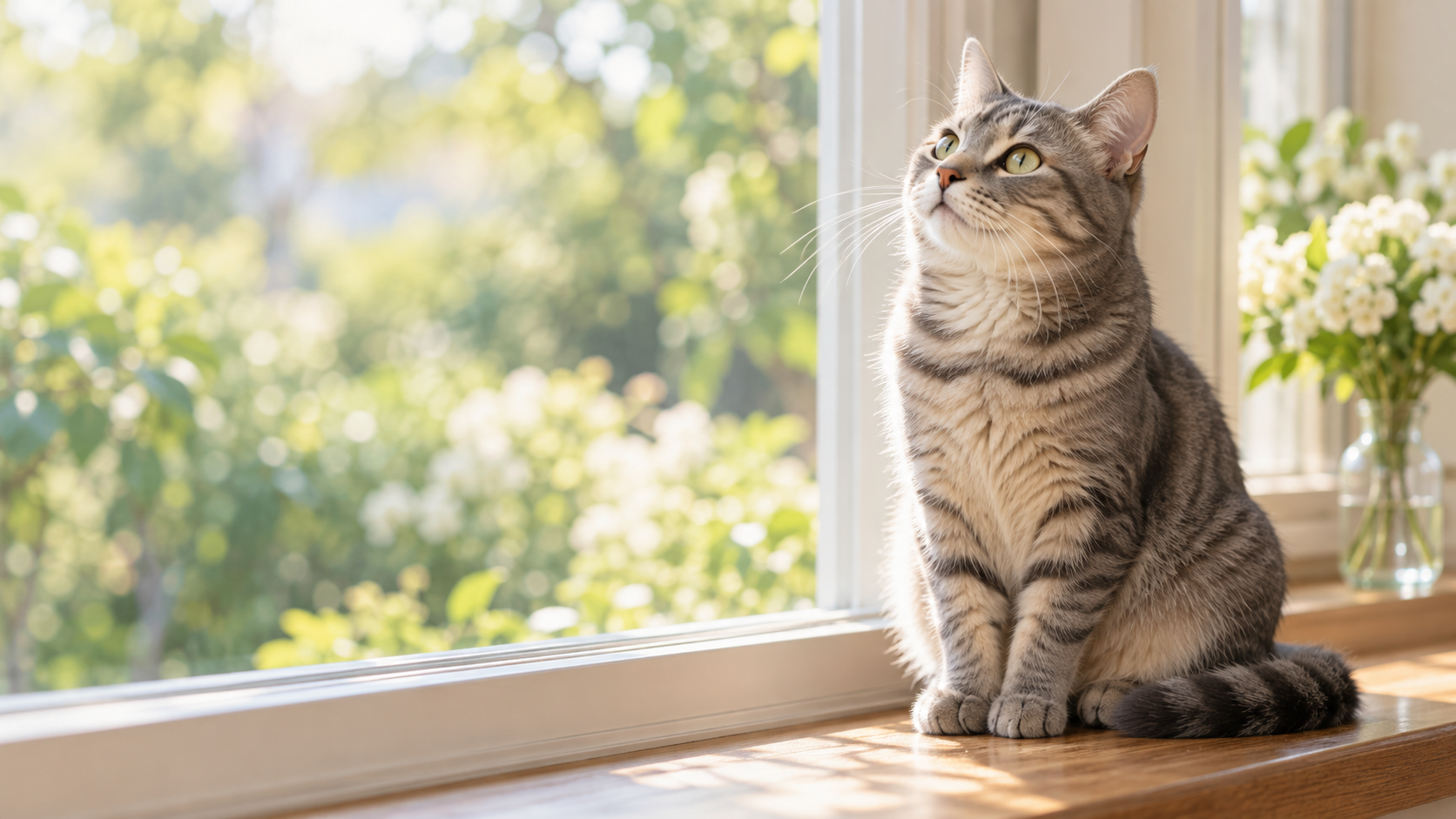
A calming space for a cat does not need to be a separate room. In a small home, the goal is to create one or more predictable places where the cat can rest without being followed, startled, or forced into interaction. Height, concealment, familiar scent, easy escape routes, and control over social contact usually matter more than buying a special “calming” product.
Start with the cat’s current choices
Before adding furniture, watch where the cat already goes when the home becomes noisy. A shelf, the top of a wardrobe, under a chair, or a quiet corner may already have the qualities the cat prefers. Improving that location is often easier than persuading the cat to use a new bed in a more convenient place.
Do not block a favorite safe area unless there is a genuine safety problem. Predictability is part of what makes a space reassuring.
Offer both height and concealment
Some cats relax when they can observe the room from above; others prefer a covered bed or box at floor level. A small apartment can provide both by using vertical space. A stable cat tree, window perch, shelf system, or furniture top can create height, while a box or partially covered bed provides retreat.
Every elevated option must be secure. Avoid narrow shelves or unstable furniture that can tip when the cat jumps.
Protect the escape route
A calming space should not become a dead end where another pet or a child can corner the cat. Ideally, the cat can leave without passing directly through the source of stress. In multi-cat homes, this may mean providing several high routes or more than one resting area.
Do not place the only hideaway beside a noisy appliance or in a hallway where people constantly walk past.
Use familiar bedding and scent
Washable bedding is practical, but avoid stripping every familiar scent from the cat’s environment at once. Rotating blankets rather than washing all of them on the same day can preserve some familiar smell. A bed that smells like the household may be more attractive than a brand-new fabric item.
Avoid strongly fragranced cleaners, air fresheners, or essential oils around a resting area. Some fragrances and oils can be unsafe for cats, so use only products known to be appropriate.
Reduce unpredictable noise
You cannot make a busy home silent, but you can choose a resting location away from door slams, speakers, vacuum storage, and kitchen clatter. Soft furnishings may reduce echoes. Some cats tolerate steady background sound better than sudden bursts of noise.
If the cat is fearful during construction, fireworks, or other exceptional events, ask a veterinarian about a specific management plan rather than relying solely on a new hide.
Keep food, water, and litter accessible
A safe resting place should not require the cat to pass a dog, another cat, or a busy family area every time it needs water or the litter box. In a small home, thoughtful placement matters more than distance. Multiple water points or an additional litter box may reduce competition in multi-cat households.
Do not put food and litter immediately beside one another simply because space is limited; use separate zones when possible.
Make vertical space useful, not crowded
Wall shelves and tall cat furniture can expand usable territory without taking much floor area, but the route needs comfortable landing points. Older or less agile cats may need lower steps. Young active cats may appreciate more challenging routes, provided the structures are secure.
Leave enough room for the cat to turn and settle. A narrow decorative shelf is not automatically a comfortable resting platform.
Respect the space when the cat uses it
A retreat stops feeling safe if people repeatedly reach in, pick the cat up, or use the area for forced medication and grooming. Whenever possible, let the cat choose when to leave. Children should be taught that a cat in its designated retreat is not available for play.
Necessary care still has to happen, but performing every unpleasant task in the same “safe” bed can undermine the purpose of the space.
Busy routines need predictable check-ins
Cats often adapt well to active households when important resources and interaction remain predictable. Regular feeding times, short play sessions, and consistent evening routines can help. A calming space is not a substitute for enrichment or social contact; it gives the cat control over when to participate.
When another pet shares the home
Give the cat routes and resting areas the other animal cannot easily block. A baby gate with a cat-sized opening, high shelves, or separate zones may help depending on the species and individual behavior. Introductions between pets should be gradual, and persistent chasing or intimidation needs a behavior plan rather than additional furniture alone.
Signs the setup is not enough
Hiding more than usual, loss of appetite, inappropriate elimination, excessive grooming, aggression, or sudden withdrawal can reflect stress or medical problems. If behavior changes, especially when accompanied by physical signs, arrange veterinary assessment. Environmental changes are useful, but they should not delay care.
Visitors and temporary disruption
Before guests arrive, make sure the cat can reach a quiet retreat without passing through the busiest room. Move food or water only if necessary and avoid locking the cat into an unfamiliar area at the last minute. For parties, repairs, or deliveries, a familiar room with bedding, litter, water, and a closed door can be useful when the cat is comfortable there. Prepare the space before the noise begins.
Do not confuse hiding with relaxation
A cat crouched under furniture for hours may be frightened rather than comfortably resting. Relaxed body language, normal eating, grooming, stretching, and voluntary movement are better signs that the environment is working. If the cat hides more and more despite environmental improvements, look for the underlying cause rather than adding more hiding boxes.
Calming products are optional, not the foundation
Pheromone products, calming beds, or supplements are sometimes used in behavior plans, but they should not replace resource access, gradual introductions, predictable routines, or veterinary assessment. If considering a supplement or medication, discuss it with a veterinarian. The physical layout of the home and the cat’s ability to control distance from stressors remain the core of a calming setup.
Review the space every few months
Household routines change. A new baby, pet, roommate, work schedule, or piece of furniture can alter a previously safe route. Recheck whether the cat still has quiet resting options and whether another animal has begun blocking them. Small adjustments made early can prevent a retreat from becoming unusable.
Write a household agreement
Agree that nobody reaches into the retreat to pick up or play with the cat. Explain the rule to children and visitors in simple terms. Keep a clear route out and watch whether another pet starts waiting there. Review the location when routines change, such as working from home or having guests. The useful measure is whether the cat rests comfortably and can choose interaction, not whether the retreat looks cozy to a person.
Sources and scope
This guide offers practical selection and setup checks. It does not claim hands-on testing of named products. Follow the exact product manual for installation and care; consult a veterinarian about changes in your pet’s health or behavior.