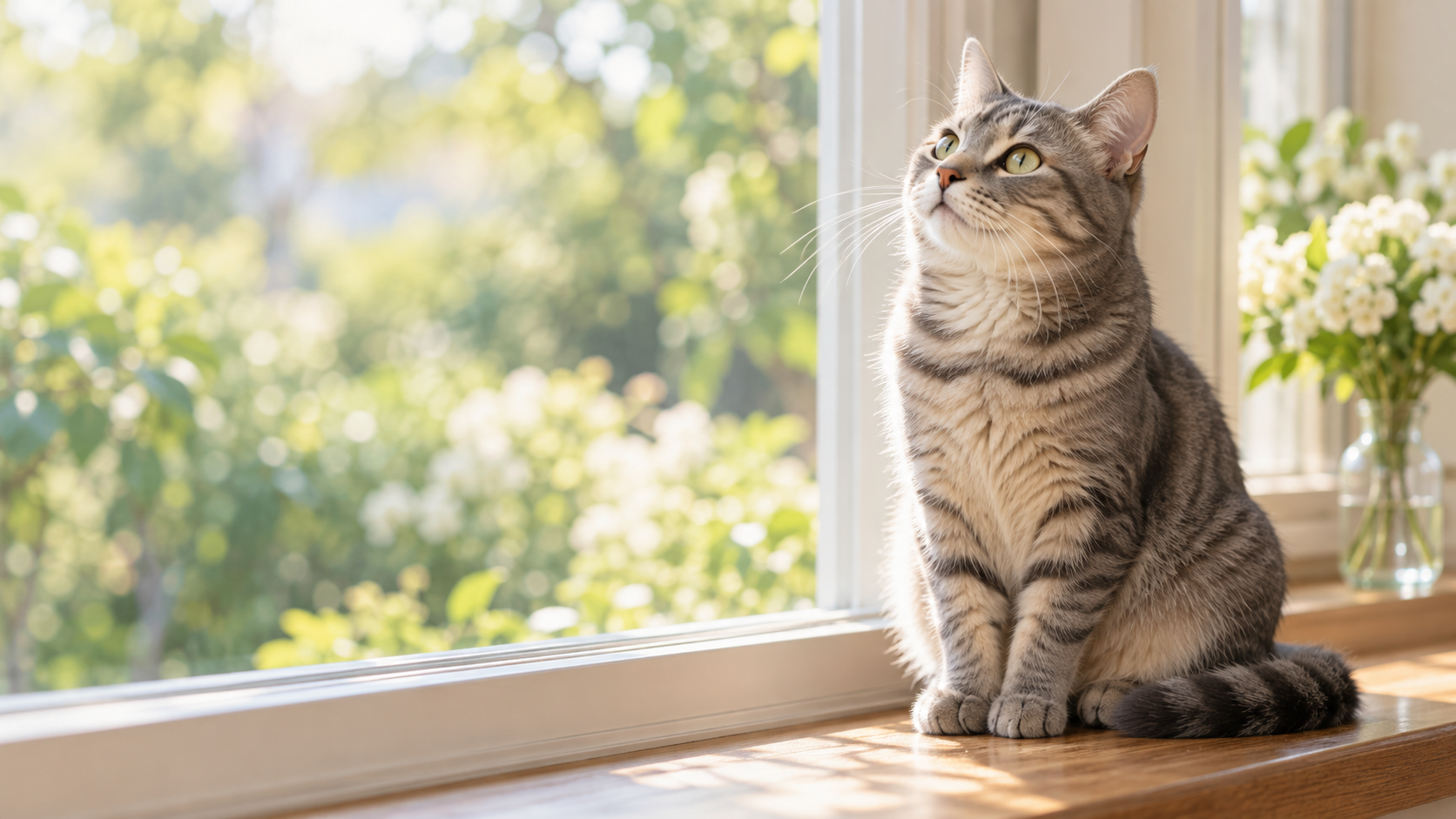
A calming space is not simply a bed or a pretty covered box. For a cat, it is a place where ordinary household activity becomes easier to predict: there is a route in, a way to leave, familiar smells, and enough separation from visitors, noise, or other pets to rest without being interrupted. Cleaning that place requires a different approach from wiping down a kitchen counter. The aim is to control dirt and hazards without stripping away every familiar scent or repeatedly moving the retreat into a new part of the house.
Observe the space before changing it
Watch the cat use the retreat on an ordinary day, preferably without standing over it. Does the cat sleep inside, pause at the doorway, or choose a nearby chair instead? Does another animal block the entrance? Can the cat leave without squeezing past a person or a pet? These observations matter because a perfectly clean shelter that the cat cannot use comfortably has failed its main purpose. Take note of any loose cushions, rough edges, unstable furniture, or cables within reach. If the shelter is near a heater, door that slams, or a frequently used appliance, consider whether the location is the problem before buying new accessories.
A useful first check is to distinguish normal mess from a change in behavior. A few hairs on the blanket are expected. Suddenly avoiding a previously preferred hideaway may indicate a new odor, a disturbance, a sore joint, competition with another pet, or illness. Cleaning can address the first issue, but it is not a universal solution. If a cat becomes withdrawn, stops eating, avoids the litter box, or shows other concerning changes, contact a veterinarian rather than assuming the retreat needs stronger fragrance or a more expensive bed.
Keep the familiar scent while removing actual dirt
Cats use scent to understand what belongs in their environment. That is why changing every blanket, scratching surface, and soft toy on the same day may make a familiar corner feel unfamiliar. Instead, remove visible dirt from one item at a time. Shake loose hair from a washable mat outdoors or collect it with a lint roller. Launder the soiled covering while leaving another familiar item in place, provided it is safe and reasonably clean. After the washed piece is completely dry, return it to roughly the same position. This staggered approach is especially useful in busy homes where a cat needs continuity during visitors, furniture rearrangement, or seasonal cleaning.
Avoid the opposite mistake of preserving scent at the cost of hygiene. Urine, vomit, feces, food residue, or damp bedding should be addressed promptly. A familiar odor is not a reason to leave biological contamination in a resting area. When a strong accident odor remains after cleaning, use a product specifically labeled for that material and type of mess, follow the maker's directions, and prevent the cat from accessing the area until it is safe and dry. Never mix cleaning products in an attempt to make them stronger.
Establish a gentle daily reset
A daily reset should be brief enough that it does not turn the retreat into a regular source of disturbance. While the cat is elsewhere, remove any sharp debris or food pieces, straighten bedding only if needed, and check for damp spots. Look at the entrance and the route leading to it; a shifted storage box or a vacuum left in the hallway can block access in ways people overlook. Check that a window perch, raised platform, or cubby has not become loose. Then leave the space alone. Most homes do not require a full wash of clean bedding every day, and excessive disruption can defeat the purpose of providing a safe refuge.
For a shy or recently adopted cat, consistent timing matters. Try to tidy during a predictable part of the day rather than suddenly reaching into the hideaway while the cat is inside. If cleaning is urgent, encourage the cat to leave voluntarily by opening an alternative quiet space. Do not pull a frightened cat out of a covered bed by force merely to complete a housekeeping schedule. A calm exit preserves the cat's ability to choose when to interact, which is part of what makes the retreat reassuring.
Wash soft bedding according to its actual construction
Read the sewn-in label before putting a bed, padded cave, or cushion into a machine. A removable cover may be washable while its foam insert is not. Some beds have glued panels, nonremovable filling, or a cardboard base that deteriorates when soaked. Where machine washing is allowed, use the temperature and cycle recommended by the manufacturer and a detergent suitable for the household; avoid heavily perfumed boosters that leave a strong smell. If the cover needs hand washing, use a modest amount of cleaning solution and rinse thoroughly. Do not assume that adding extra detergent improves hygiene.
Drying deserves as much attention as washing. A bed that feels dry on the outside can still have damp stuffing or a wet underside. Moisture trapped against a floor or inside foam can produce musty odors and shorten the life of the product. Air-dry or tumble-dry only as the care label permits. Feel around seams and the center of thick inserts before returning the bed. If the material remains damp, offer another safe resting place while it finishes drying. Never use a high heat setting to speed up drying when the label prohibits it.
Clean enclosed hideaways without making them smell unfamiliar
Covered cat caves, felt houses, and fabric tunnels often collect dust in corners that are easy to miss. Begin by removing the cushion and vacuuming loose hair with a low-power upholstery attachment, away from the cat. Pay attention to folded seams and the base, where crumbs and shed fur accumulate. If the structure can be spot-cleaned, test the manufacturer's recommended method on a discreet area. Use as little moisture as the material requires and blot rather than scrub delicate felt or bonded fabric. The goal is to remove grime while preserving the shape and ventilation of the entrance.
Rigid plastic shelters are generally easier to wipe, but their surfaces still need proper rinsing and drying where required by the cleaner's label. Check the corners for residue and the bottom for scratches that could trap dirt. Wooden shelters require particular caution around unfinished edges, swollen panels, and exposed adhesive. Avoid saturating wood unless the manufacturer clearly allows it. A cover that smells of chemicals after cleaning should not be placed back over a confined space and presented to the cat as immediately usable.
Maintain elevated perches and window retreats safely
A window perch may look like a soft resting surface, but its supporting hardware is a safety-critical component. Before cleaning, remove the cat from the area without startling it. Inspect suction cups, brackets, screws, straps, and the surface to which they attach. Follow the manufacturer's instructions for preparing glass or other mounting surfaces; dirt and oils can affect some suction systems. Replace worn parts when approved replacements exist, and retire the perch if its load-bearing structure is damaged or cannot be secured. Do not improvise repairs with tape and assume a sleeping cat will remain safe.
When washing a detachable fabric sling, note how it was mounted and reinstall it exactly as specified. Verify the attachment before permitting use, following the product's testing guidance. Look for changes in the surrounding room as well: a blind cord, opened window, loose screen, or nearby shelf may introduce a risk that was absent when the perch was first installed. Screens are not substitutes for secure window protection. The cleaning routine is a good opportunity to conduct these practical checks, rather than treating the perch as only a laundry item.
Manage odor without adding scent-based stress
A calming corner does not need to smell like perfume. Strong sprays, plug-in fragrances, essential oils, and scented powders can be unpleasant or unsafe for cats, depending on their ingredients and exposure. Do not put essential oils on bedding or use fragrance to mask an unresolved accident. First identify the source of the odor: damp fabric, litter tracked into the area, spoiled treats, a dirty nearby surface, or contamination on the floor. Remove the source and clean the affected surface by an appropriate method. Ventilate the room without creating an unsafe escape route or cold draft directly onto the resting area.
If the cat repeatedly urinates in its retreat, do not respond only by washing the bed more frequently. Assess litter-box access and cleanliness, household changes, interactions with other pets, and possible medical concerns. A veterinarian can help rule out health-related causes, while environmental adjustments may make the space more secure. Punishment, shouting, or forcing the animal to remain in a soiled shelter is counterproductive. The target is a comfortable place that the cat chooses, not a location it has learned to avoid.
Make cleaning manageable in multi-cat homes
In a multi-cat household, a single attractive hideaway can become a point of conflict. One cat may guard its entrance, especially if it has only one exit or sits at the end of a narrow corridor. Watch for quiet blocking, staring, chasing, or a cat waiting until another has left before approaching. Provide several resting spots in separate areas instead of assuming the animals will share. Each space can have its own cleaning rotation so every cat still has access to familiar shelter when one bed is being washed.
Separate resting surfaces also make it easier to identify whose bedding is soiled, which cat prefers a particular texture, and whether one animal is avoiding a location. Keep a simple household note rather than relying on memory. If one cat is recovering from an illness, follow veterinary guidance about hygiene and separating belongings. Do not transfer dirty bedding between cats merely to distribute familiar scents. Social comfort and infection control are different questions, and both deserve attention.
Adjust the retreat for kittens and older cats
Kittens explore with teeth and claws, so check for loose threads, dangling decorations, small detachable pieces, and exposed filling. A fabric cave that looked tidy yesterday may have a new torn seam after a vigorous play session. Keep the retreat away from accessible cords and unstable stacks. Young cats also grow quickly; a once-roomy opening can become restrictive. Reassess the size and stability instead of insisting that a cat continue using a shelter simply because it was purchased recently.
For an older cat, easy entry can be more valuable than dramatic height. Watch for hesitation before jumping, slipping at the threshold, or choosing the floor instead of a favorite raised bed. Choose a resting spot that does not require an uncomfortable climb, and use a secure nonslip surface if appropriate. Supportive bedding is useful only when it stays dry and can be cleaned without leaving rough seams or bunching. Sudden changes in mobility or grooming deserve veterinary attention; adding a ramp does not diagnose or treat the underlying problem.
Know when replacement is safer than another wash
Not every shelter should be repaired indefinitely. Replace a bed with exposed stuffing that the cat chews, persistent dampness deep in its core, broken zippers that present a snagging hazard, or a frame that no longer stands securely. A scratching surface built into the retreat may need replacement if its backing is loose or sharp fasteners are exposed. For enclosed products, inspect ventilation openings and the entrance after every major cleaning. Material distortion can change airflow or create a tight opening even when the outside appears acceptable.
Keep receipts and manufacturer instructions where possible. They can clarify whether a cover is replaceable, whether a spare support is sold, or whether a product is still within a warranty period. When deciding between washing, repairing, and replacing, prioritize the animal's safety, the material's condition, and whether the cat actually uses the space. Do not interpret visible wear alone as proof of a hazard, but do not ignore structural faults because the cat seems attached to the object.
Use a small reset rather than a redesign
Once the retreat is dry and ready, return it to the familiar arrangement and observe from a distance. Keep an acceptable alternative resting place available during cleaning. If the cat avoids the area, check for residual odor, a shifted entrance or a new obstacle before buying another bed. Write down one change at a time so the household can distinguish a cleaning problem from a location or access problem.
Sources and scope
This guide offers practical selection and setup checks. It does not claim hands-on testing of named products. Follow the exact product manual for installation and care; consult a veterinarian about changes in your pet’s health or behavior.