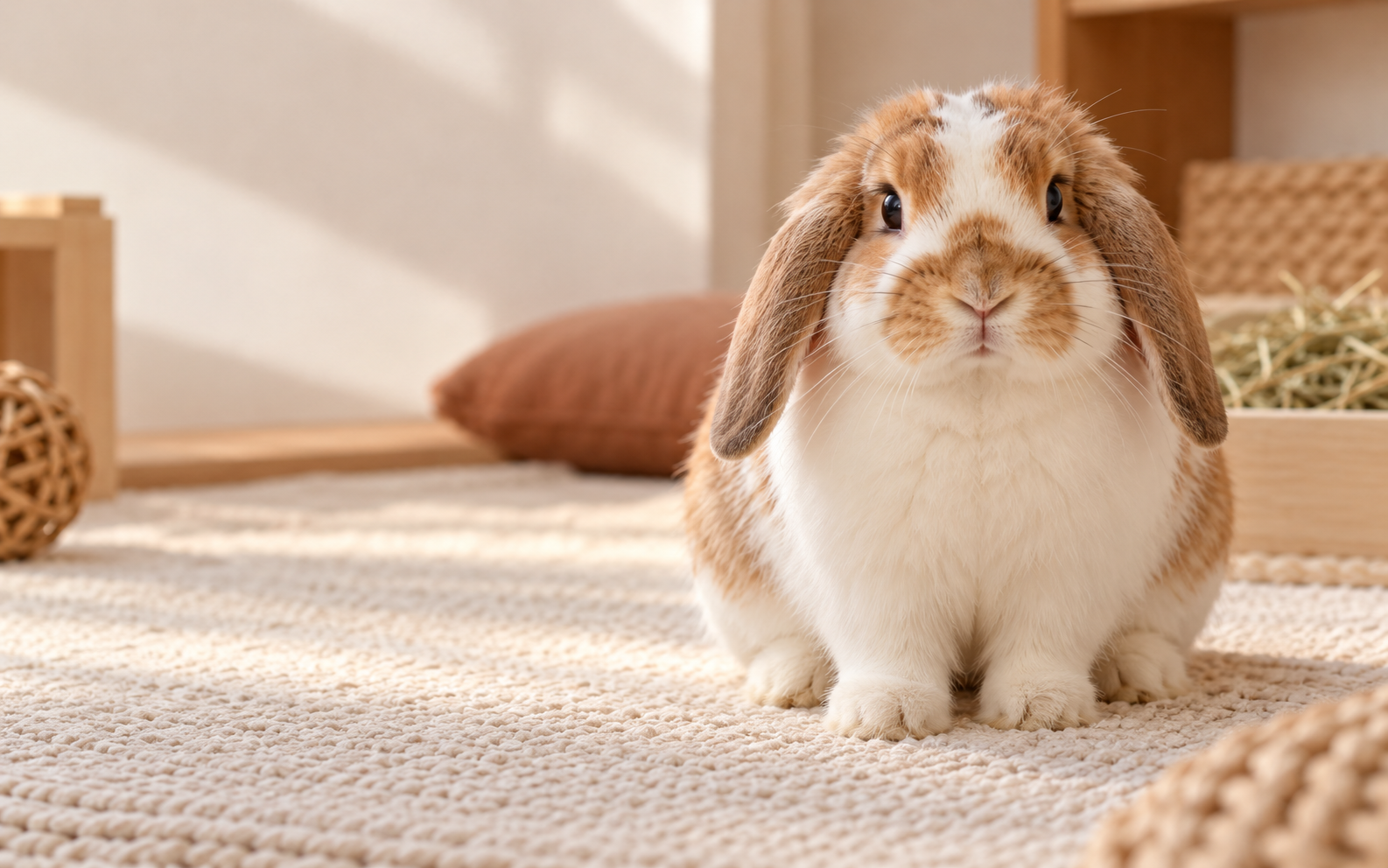
An indoor rabbit habitat should function more like a safe room than a small cage. Rabbits need enough space to stretch, hop, stand upright, rest away from litter, and exercise every day. The enclosure also needs secure flooring, continuous hay, a litter area, hiding places, and protection from electrical cords and other household hazards. Use this checklist to compare pens, rooms, and large enclosures before buying accessories.
1. Start with usable floor area
Look at the space the rabbit can move through when food, litter trays, hides, and bowls are already inside. A nominally large enclosure can become cramped after furnishings are added. Current welfare recommendations vary, so check guidance from reputable rabbit organizations in your region and plan for daily exercise beyond the base area.
2. Prefer a broad footprint over height
Rabbits need horizontal running space. Multi-level hutches may add interest, but ramps and shelves do not compensate for a narrow ground floor. A puppy pen or rabbit-safe room section often provides more useful movement space than a tall traditional cage.
3. Check standing height
The rabbit should be able to sit upright on the hind legs without ears pressing into a roof. Large breeds and upright-eared rabbits need more height than compact animals. If the enclosure has a cover, measure internal height beneath supports rather than the tallest outside point.
4. Use solid, non-slip flooring
Wire floors can injure rabbit feet and should not be the primary surface. Smooth laminate can also be difficult if the rabbit slips. Use stable washable flooring with rugs or mats that provide traction, provided the rabbit does not chew and swallow the material.
5. Make the litter tray generous
Many rabbits like to eat hay while using the litter area. Choose a tray large enough for the rabbit to turn around and sit comfortably. Low-entry trays help older or disabled rabbits. Use rabbit-safe litter and avoid clumping cat litter or strongly scented products unless a veterinarian specifically recommends otherwise.
6. Plan the hay station
Hay should be continuously available. A large pile in or beside the litter tray encourages natural feeding and can simplify cleanup. If using a rack, openings must not trap the head or legs. Refill before the supply becomes sparse.
7. Provide more than one resting place
A cardboard box with two entrances, a tunnel, or an open hide gives the rabbit somewhere to retreat. In bonded pairs, avoid a single small hide with one doorway where one rabbit can trap the other. Several resting options support choice.
8. Protect electrical cords
Rabbit-proofing is essential. Move cords completely out of reach or enclose them in robust protective conduit. Thin spiral wraps may not stop determined chewing. Check phone chargers, lamp leads, power strips, and cables behind furniture before allowing free-roam access.
9. Protect walls and furniture
Baseboards, carpet edges, and sofa corners are common chewing targets. Use barriers, safe chew alternatives, and supervision. Avoid deterrent sprays unless the product is explicitly appropriate around rabbits and used as directed.
10. Secure the pen height
Some rabbits jump higher than expected. Pen panels should be tall enough for the individual, and nearby furniture should not create a launch platform. If a cover is needed, it must be secure and well ventilated.
11. Consider bonded pairs
Two compatible rabbits need enough room to rest together and apart. Duplicate key resources such as water points and hides when competition appears. Bonding should be managed carefully; simply placing unfamiliar rabbits in one pen can lead to serious fighting.
12. Choose stable food and water containers
Heavy ceramic water bowls are commonly used because they allow natural drinking and are difficult to tip. Bottles can be a backup but need daily flow checks. Food bowls should be stable and sized for measured portions rather than always full.
13. Add safe chewing material
Cardboard, untreated rabbit-safe branches, hay-based toys, and paper items can support chewing and foraging. Rotate simple items instead of buying elaborate plastic toys. Remove anything that develops sharp staples, glue exposure, or loose threads.
14. Keep the habitat away from heat
Rabbits tolerate cold better than overheating. Place the enclosure away from radiators, direct afternoon sun, and hot enclosed rooms. Provide shade and good ventilation. Heat stress can be an emergency, so learn the warning signs and have a summer plan.
15. Think about cleaning access
You should be able to reach every corner without dismantling the entire enclosure. A walk-in pen makes daily litter changes easier. Protect the floor beneath the pen with a waterproof layer if accidents could damage wood or carpet.
16. Avoid constant rearrangement
Rabbits build routines around litter, feeding, and resting areas. Cleaning is necessary, but changing the entire layout every few days can be disruptive. Keep the main zones stable and rotate only small enrichment items.
17. Supervise expansion into the room
When increasing free-roam space, open one additional area at a time. Watch where the rabbit chews, hides, and eliminates. Rabbit-proof new zones before access rather than correcting hazards after the animal discovers them.
18. Plan for age and mobility
Senior rabbits may need lower litter entrances, softer traction, shorter distances between resources, and fewer slippery transitions. If mobility changes suddenly, seek veterinary assessment rather than assuming it is normal aging.
19. Check door width
A pen door should be wide enough for you to enter carrying a litter tray or carrier. Stepping over panels daily is inconvenient and can be unsafe. A low threshold helps older rabbits and makes cleaning equipment easier to move.
20. Plan a safe temporary holding area
During deep cleaning, repairs, or home maintenance, you need somewhere secure to place the rabbit. A spare exercise pen or carrier plus a protected room can work for short periods. Do not improvise with an open cardboard box when doors or windows are being used.
21. Think about flooring under the litter zone
Urine can soak through rugs and damage wood or laminate. Use a waterproof layer beneath the litter area, then add a non-slip washable surface on top. Extend protection beyond the tray if the rabbit tends to urinate over the edge.
22. Keep grooming supplies nearby but outside reach
A small basket with a brush, nail clippers, and health records is convenient near the pen, but store it where the rabbit cannot chew handles or plastic. Long-haired rabbits need regular coat care to prevent mats and ingestion of excessive loose fur.
23. Include an emergency carrier
A secure rabbit carrier should be ready for veterinary visits and evacuation. Keep it accessible rather than buried behind enclosure panels. Line it with a non-slip absorbent layer and add hay for transport when appropriate.
24. Check ventilation around solid panels
Clear acrylic or plastic panels reduce scattered hay but can also reduce airflow if they enclose every side. Leave adequate ventilation and avoid creating a greenhouse effect in direct sun. Smell the habitat at rabbit level; stale or ammonia-heavy air signals that cleaning or ventilation needs improvement.
25. Keep hay storage nearby but protected
A dry hay bin near the pen makes refilling easy, but the rabbit should not be able to chew through plastic or pull the entire reserve into the enclosure. Store bulk hay with airflow and away from damp floors.
26. Make room for human care
The enclosure should be comfortable for the caregiver to enter, sweep, refill hay, and handle a rabbit when necessary. A beautiful pen that requires crawling over furniture every day will be cleaned less consistently. Human access is part of good habitat design.
27. Reassess bonded-pair space after conflict
If rabbits that previously lived peacefully begin chasing or guarding resources, add duplicate water, hay, and hides while arranging veterinary checks and behavior advice. Pain or illness can change social behavior, so do not solve sudden conflict only by making the pen larger.
28. Protect the habitat from household fumes
Do not place rabbits beside a kitchen stove, smoking area, scented candle, or room where aerosol cleaners are used frequently. Good indoor housing includes clean air. If the pen must be in a multipurpose room, move the rabbits away during painting, strong cleaning, or renovation work.
29. Keep a predictable daily sequence
Hay refills, litter checks, food, exercise, and evening observation are easier to maintain when they happen at roughly consistent times. A predictable routine also makes it easier to notice when a rabbit does not come for food or behaves differently.
30. Check the habitat at rabbit eye level
Sit on the floor and look for exposed staples, sharp cable-cover edges, gaps behind furniture, and hanging fabric threads that are easy to miss from standing height. A five-minute inspection from the rabbit’s perspective often finds hazards that a top-down view misses.
Final takeaway
Choose an indoor rabbit habitat for floor space, solid footing, safe height, hay access, litter comfort, and rabbit-proofing. A large pen or protected room usually supports natural behavior better than a small cage. Build the setup around daily movement and safety, then add simple enrichment without crowding the usable space.
Editorial reference points
- Association of Exotic Mammal Veterinarians — owner resources
- Association of Reptile and Amphibian Veterinarians
Product specifications, prices and policies can change. Verify current manufacturer documentation before purchasing, and use a veterinarian or qualified species professional when a health or welfare concern is involved.
Compare the next decision or return to the complete 290-guide library.