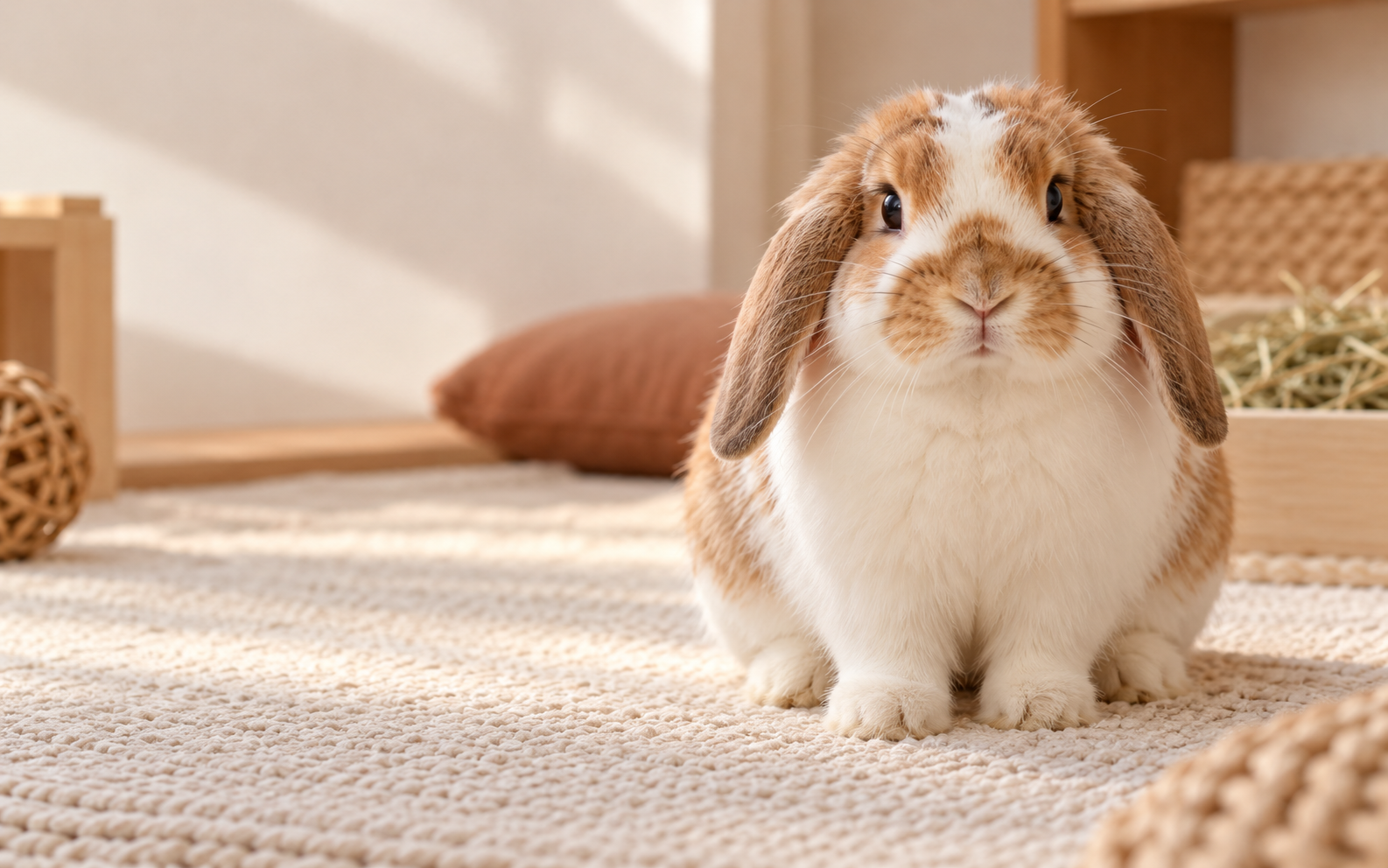
An indoor rabbit home works best when the rabbit has room to move, places to hide, a generous litter and hay area, safe surfaces for the feet, and protection from household hazards. Rabbits are active, social animals with strong chewing and digging instincts. A small traditional cage is not enough as a complete living environment. The most practical approach is usually a large exercise pen or rabbit-proofed room section that remains stable day to day.
Think in zones
Instead of filling the enclosure randomly, divide it into simple zones: litter and hay, water and food, rest, and open movement. Keeping the center relatively clear gives the rabbit room to hop and stretch.
Zones also make cleaning easier because most urine and hay mess can be concentrated around the litter area.
Floor space comes first
Choose the largest usable footprint you can maintain. Current rabbit-welfare guidance varies across organizations and countries, so consult up-to-date recommendations for the size and number of rabbits you keep. Remember that furniture inside the pen reduces the actual floor area.
Daily exercise outside the base enclosure remains important unless the rabbit already lives in a fully rabbit-proofed room.
Solid footing
Wire floors are unsuitable as a primary walking surface because they can injure the feet. Smooth tile or laminate can also be difficult if the rabbit slips. Provide non-slip rugs, mats, or other stable surfaces that the rabbit does not chew and swallow.
Check the underside of mats regularly for moisture.
Litter setup
A large litter tray should allow the rabbit to turn around comfortably. Many rabbits like eating hay while using the tray, so placing a hay pile or safe feeder beside it can encourage consistent litter habits.
Use rabbit-appropriate litter without strong perfume. Avoid clumping cat litter and materials that create hazardous dust unless a veterinarian advises otherwise.
Hay is the main food feature
Appropriate grass hay should be available at all times. Keep it dry and refresh it regularly. A rack can reduce waste, but openings must not trap the head or legs. A generous loose pile in or near the litter area is often simple and effective.
Water
Heavy ceramic bowls allow natural drinking and are easy to monitor. Bottles can be used as a backup, but check the nozzle daily. In a bonded pair, more than one water point may reduce competition.
Wash bowls daily and remove hay or bedding that falls into them.
Food bowls
Offer measured pellets according to current dietary guidance rather than keeping a bowl full all day. Heavy ceramic dishes resist tipping. Fresh leafy vegetables can be offered in appropriate amounts, introduced gradually.
Diet needs change with age and health, so discuss concerns with a rabbit-savvy veterinarian.
Hides
Every rabbit needs a retreat. Cardboard boxes, tunnels, and wooden hides can work when they are large enough and have safe edges. In bonded pairs, two-exit hides are useful so one rabbit cannot block the only doorway.
Provide more than one resting option when space allows.
Chewing outlets
Cardboard, safe untreated branches, hay-based toys, and paper products can satisfy chewing behavior. Rotate simple materials rather than filling the pen with plastic toys. Remove anything with staples, sharp glue residues, or splintering wood.
Protect electrical cords
Cords are one of the most important indoor hazards. Move them entirely out of reach or enclose them in robust protective conduit. Check behind furniture, under desks, and beside beds before giving access.
Do not rely on supervision alone; a rabbit can bite through a cable quickly.
Protect baseboards and furniture
Use barriers around valued furniture and offer legal chewing alternatives nearby. A puppy pen panel can protect a wall corner without coating the room in deterrent spray.
If a rabbit repeatedly targets one area, adjust access rather than expecting training to override the chewing instinct.
Digging opportunities
Some rabbits love to dig. A sturdy box filled with shredded paper, hay, or another rabbit-safe material can redirect the behavior. Keep the box away from electrical items and replace material when wet or soiled.
Temperature
Rabbits are sensitive to heat. Keep the living area away from direct sun, radiators, and hot enclosed rooms. Provide shade, fresh water, and good airflow.
Learn the signs of heat stress and have a plan for warm weather, especially in apartments without reliable cooling.
Household noise
Place the pen where the rabbits are part of normal home life but not beside speakers, slamming doors, or constant foot traffic. A quiet hide allows retreat when visitors or cleaning make the room busy.
Other pets
Dogs and cats can frighten or injure rabbits. Introductions require careful management and may never be appropriate for unsupervised contact. Use secure barriers and give the rabbits spaces other animals cannot enter.
Bonded rabbits
Compatible rabbits often benefit greatly from living together, but bonding should be done carefully. Do not place unfamiliar rabbits into the same territory and hope they will work it out. Seek guidance from an experienced rabbit rescue or veterinarian when needed.
Cleaning
Remove wet litter, spoiled greens, and heavily soiled bedding every day. Wash the litter tray as needed with a rabbit-appropriate method. Keep some familiar scent in the main habitat rather than disinfecting every surface aggressively without reason.
Health checks
Observe appetite, droppings, posture, movement, eyes, nose, and breathing every day. A rabbit that stops eating or producing normal droppings needs urgent veterinary advice. Dental disease, gastrointestinal problems, and pain can worsen quickly.
Nail and coat care
Keep nail clippers and a brush where they are easy for the caregiver to reach but impossible for the rabbit to chew. Long-haired rabbits need regular coat checks because mats can tighten close to the skin. During heavy shedding, gentle grooming can reduce the amount of loose fur swallowed. Rabbits cannot vomit hairballs, so poor appetite during shedding is never something to ignore.
Carrier training
Leave the travel carrier open near the habitat with hay or a familiar towel inside so it is not introduced only during emergencies. Practice short sessions of entering and closing the door. A carrier that opens from the top as well as the front can simplify veterinary handling.
Free-roam time
If the rabbit does not live in a fully free-roam setup, schedule daily access to a larger rabbit-proofed area. Supervise until you understand chewing and digging habits. Exercise time should not depend on whether the household happens to remember after a busy day; a predictable routine is easier for everyone.
Visitors and children
Give the rabbit a retreat where guests cannot reach in. Children should sit on the floor and allow the rabbit to approach rather than picking it up repeatedly. Most rabbits prefer interaction at ground level and can be injured if dropped.
Emergency planning
Keep a small bag with the carrier, a copy of medical information, a water bowl, hay, and a few days of essential supplies. In a fire, flood, or building evacuation, you may have only minutes to move the rabbit. Everyone in the household should know where the carrier is stored.
Monitor droppings
Normal fecal pellets should be plentiful and consistent. A marked reduction in size or number, especially with reduced appetite, can signal gastrointestinal trouble. Soft cecotropes are different from diarrhea, but repeated soiling still deserves veterinary discussion.
Watch the teeth indirectly
Rabbit teeth grow continuously. Dropping food, wet chin, reduced hay intake, selective eating, or weight loss can indicate dental problems even when the front teeth look normal. Veterinary dental assessment may require examining the back teeth, which cannot be judged from the home setup.
Grooming during shedding seasons
Rabbits can shed heavily. Gentle brushing and hand-plucking loose coat when appropriate can reduce fur ingestion, but never pull attached fur or cut close mats with scissors near delicate skin. Long-haired breeds may need professional or veterinary grooming support.
Spay and neuter planning
Discuss spaying or neutering with a rabbit-savvy veterinarian. Beyond reproduction control, these procedures can affect health and bonding plans. Timing depends on sex, age, health, and veterinary practice.
Floor protection beyond the pen
Free-roam areas may need cord covers, washable rugs, and barriers around baseboards. Test flooring for traction. A rabbit that slips repeatedly may avoid moving through an otherwise safe room.
Check urine color in context
Rabbit urine can vary naturally in color, including orange or reddish shades from pigments, but straining, blood, sludge-like sediment, or pain warrants veterinary assessment. A clean litter tray makes changes easier to notice than a heavily soiled one.
Keep transport records ready
Store the veterinary clinic address, emergency number, and rabbit medication list near the carrier. In an urgent situation, having this information together saves time and reduces handling stress.
Final takeaway
An indoor rabbit home should provide generous floor space, solid footing, constant hay, clean water, a large litter area, hides, chewing material, and careful rabbit-proofing. Keep the layout stable, protect cords and furniture, and leave enough open space for movement. The environment should support normal behavior, not simply contain the rabbit.
Editorial reference points
- Association of Exotic Mammal Veterinarians — owner resources
- Association of Reptile and Amphibian Veterinarians
Product specifications, prices and policies can change. Verify current manufacturer documentation before purchasing, and use a veterinarian or qualified species professional when a health or welfare concern is involved.
Compare the next decision or return to the complete 290-guide library.